Why Are Names Gendered? How Masculine, Feminine, and Gender-Neutral Associations Develop
Summary
Why are names gendered? Names are usually perceived as masculine, feminine, or gender-neutral because generations of cultural use teach people to associate certain names, sounds, spellings, meanings, and traditions with boys or girls. There is nothing inherently male about a name such as James or inherently female about a name such as Sophia; those associations develop through language, naming customs, socialization, gender roles, and repeated use. Even the sounds of names can affect perception: in some languages, longer names, vowel endings, certain stressed vowels, or softer-sounding phonemes have historically been associated more often with feminine names, while shorter or consonant-heavy forms may be perceived as more masculine. But these patterns are not universal. Names can cross gender categories, become unisex, or develop entirely different associations in another country. U.S. names such as Ashley, Shannon, and Leslie show how dramatically gender perceptions can change over time. Understanding these patterns helps parents choose names thoughtfully without assuming a name determines anyone’s actual gender identity.
Table of Contents
- Why Are Names Associated With Gender?
- How Do Name Sounds and Spellings Shape Gender Perceptions?
- How Do Language and Culture Affect a Name’s Gender?
- How Do Social Expectations Influence Gendered Names?
- How Do Names Shift Between Genders Over Time?
- How Can You Check a Name’s Gender Trend in the United States?
- What Is the Difference Between Gendered, Gender-Neutral, and Nonbinary Names?
- What Do Gendered Naming Trends Reveal About Society?
- Frequently Asked Questions About Gendered Names
- Final Thoughts
Why Are Names Associated With Gender?
A name does not possess a biological gender.
Instead, societies create gendered names through repeated patterns of usage.
If parents in a particular country consistently give one name to boys for several generations, people begin to recognize it as masculine. If another name is overwhelmingly used for girls, it develops a feminine association.
That is the foundation of the answer to why are names gendered.
The connection is largely cultural.
If you want to start with the broader purpose of names themselves, our guide explaining what is a name explores how names identify people while also carrying family, linguistic, religious, and cultural meaning.
How Cultural Patterns Give Names Masculine or Feminine Associations
Imagine that a completely new name appears:
Tavren
If you have never encountered it before, you might still form an impression about whether it sounds masculine, feminine, or neutral.
Why?
You compare it—often unconsciously—with names you already know.
Perhaps its sounds remind you of:
- Darren
- Trevor
- Gavin
If those names are strongly associated with men in your culture, Tavren may also sound masculine.
Now imagine:
Eliana
Its ending and rhythm may remind an English speaker of:
- Ariana
- Juliana
- Liliana
Because those names are frequently used for girls, the new name may also sound feminine.
This process is partly socialization.
People learn naming patterns from:
- families
- schools
- books
- television
- celebrities
- historical figures
- religion
- birth announcements
- other people they meet
Over time, repeated exposure turns statistical patterns into cultural expectations.
Why Name Associations Can Change Over Time
Gender associations are not permanent.
A name can move through stages such as:
mostly masculine → shared → mostly feminine
or:
mostly feminine → more neutral
A name may also remain genuinely shared for decades.
These changes occur because parents do not select names in isolation. They react to broader baby-name trends, famous people, popular culture, changing tastes, and the names chosen by other families.
That is why a name that sounded strongly masculine to someone’s great-grandparents might sound feminine or neutral today.
The history of names such as Ashley and Leslie makes this particularly clear.
Understanding these changes also helps explain what is in a name meaning: a name’s cultural associations can evolve even though its original etymology stays exactly the same.
How Do Name Sounds and Spellings Shape Gender Perceptions?
Culture is not the only influence.
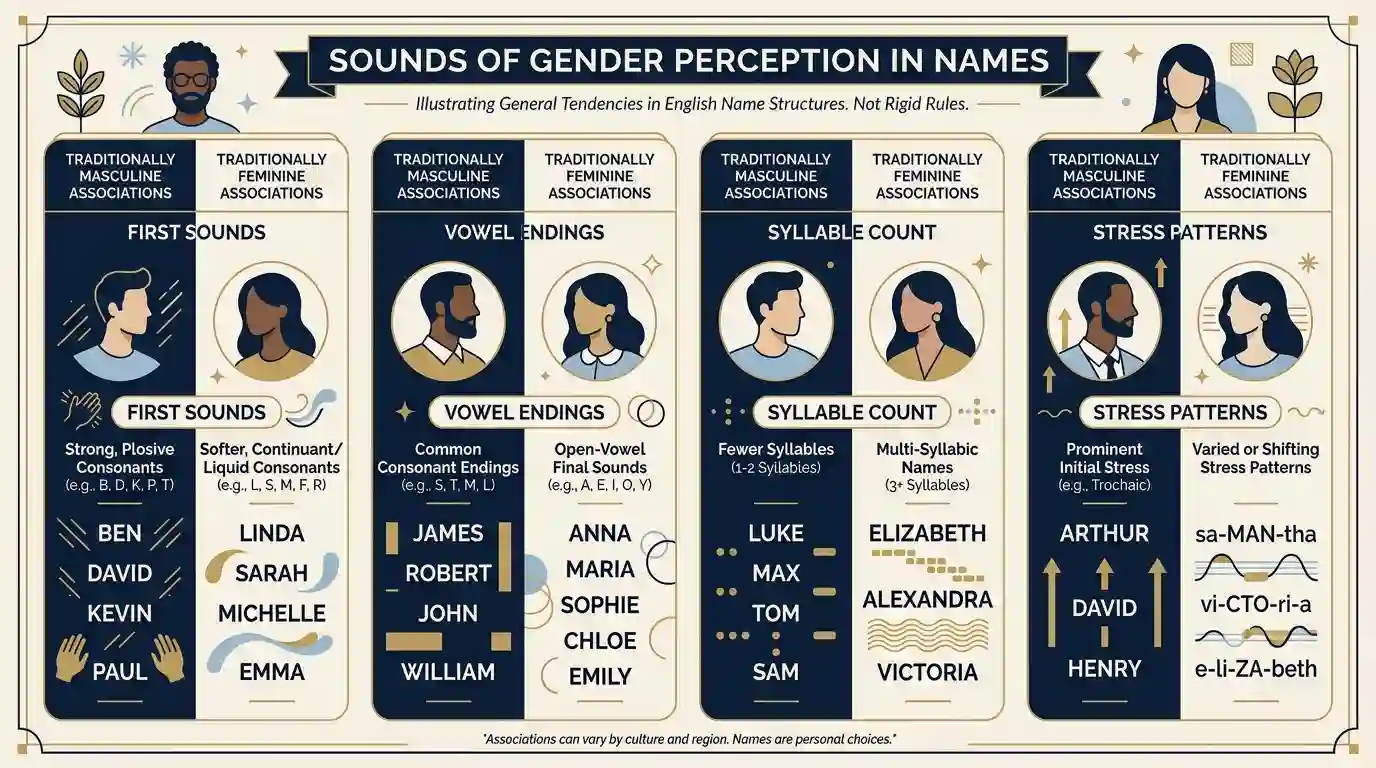
Researchers have also found patterns involving phonetics, phonemes, syllables, stress, vowels, consonants, and endings.
These patterns are often discussed under sound symbolism.
Sound symbolism refers to situations in which certain sounds become associated with qualities such as size, shape, softness, hardness, or—in some contexts—gender stereotypes.
Why a Name’s First Sound May Influence Perception
The beginning of a name can influence the impression it creates.
Research on English names has found associations between the voicing of an initial consonant and perceived gender.
A voiced sound involves vibration of the vocal cords.
Examples include sounds such as:
- /b/
- /d/
- /g/
- /v/
- /z/
An unvoiced, or voiceless, sound does not involve the same vocal-cord vibration.
Examples include:
- /p/
- /t/
- /k/
- /f/
- /s/
Some studies have found that names beginning with voiced sounds were statistically more associated with male names, while names beginning with unvoiced sounds showed stronger associations with female names.
Researchers have linked this partly to perceptions of hardness and softness.
But this is an average statistical pattern—not a naming rule.
Many feminine names begin with voiced sounds, and many masculine names begin with unvoiced sounds.
How Syllables, Stress, Length, and Endings Affect Impressions
Several other characteristics can contribute to masculine name associations or feminine name associations.
Research on English names has often found that feminine names are, on average:
- longer
- more likely to contain additional syllables
- more likely to end in vowels
- less likely to place primary stress on the first syllable
Male names have often shown the opposite statistical tendencies.
Compare:
Christopher
John
with:
Isabella
Amelia
These examples illustrate differences in name length, syllable structure, and endings, although individual examples cannot prove a general rule.
One particularly familiar pattern in English is the feminine association of names ending in -a:
- Sophia
- Olivia
- Isabella
- Amelia
- Camila
Yet this pattern is partly historical and linguistic rather than something inherently feminine about the vowel itself.
Other languages may use the same ending differently.
How Voiced and Unvoiced Sounds Are Linked With Gender Stereotypes
Why might sounds become gendered at all?
One explanation involves culturally learned gender stereotypes.
Lower, heavier, or harder-sounding forms may become associated with stereotypically masculine qualities such as:
- strength
- size
- firmness
- power
Higher, lighter, or more sonorous sounds may become associated with stereotypically feminine qualities such as:
- softness
- delicacy
- smallness
- gentleness
These associations tell us more about cultural expectations than about actual men and women.
A boy whose name sounds “soft” is not physically or emotionally softer because of his name.
A girl with a name perceived as strong or hard is not less feminine.
Sound symbolism describes patterns of perception, not personality.
What Research on Sound Symbolism Can—and Cannot—Tell Us
Research can show that certain sound patterns appear more frequently in names used for one sex than another.
It can also show that listeners sometimes use those patterns when guessing whether an unfamiliar name is masculine or feminine.
But it cannot tell us:
- a person’s gender identity with certainty
- what personality someone has
- what a name must be used for
- whether parents should avoid a particular sound
- whether a name is permanently masculine or feminine
The patterns also vary between languages.
For parents browsing Boy Names, phonetic patterns can be useful for understanding why a name may sound traditionally masculine in English, but they should never replace cultural context or individual preference.
How Do Language and Culture Affect a Name’s Gender?
There is no universal formula for gendered names.
A pattern that seems obvious in English may disappear—or mean something entirely different—in another language.
This is why cultural naming conventions are essential.
How Name Meanings and Cultural Associations Influence Perception
Sometimes gender associations come from meaning rather than sound.
Parents may historically have selected names for boys connected with concepts such as:
- strength
- courage
- leadership
- victory
- power
Names for girls may historically have emphasized ideas such as:
- beauty
- grace
- flowers
- gentleness
- purity
These distinctions reflect traditional gender roles, not universal truths about boys and girls.
As social expectations change, naming patterns can change too.
A name meaning strength can be used for a girl.
A flower or nature-inspired name can be used for a boy.
Meanings do not determine who is allowed to carry a name.
Gender Markers in Different Languages
Some languages contain especially recognizable gender patterns.
Japanese Names and the -ko Suffix
In modern Japanese naming history, the -ko suffix, commonly written with the character 子, became strongly associated with feminine names.
Examples include:
- Keiko
- Yoko
- Sachiko
- Kumiko
During much of the 20th century, -ko was an extremely prominent element in Japanese names for girls.
Yet even this apparently clear marker demonstrates how naming categories change.
The element has a much more complicated historical background and was not eternally or inherently female. Its strong association with girls developed historically, became fashionable, and later declined sharply.
That makes -ko an excellent example of how a linguistic feature can become gendered through culture rather than biology.
Gender Associations in Chinese Names
Chinese given names work differently.
Characters may be chosen partly for their meanings, visual balance, and sound.
Certain characters or Chinese character radicals can develop stronger masculine or feminine associations.
Characters associated with qualities such as beauty or elegance may appear more frequently in women’s names, while characters connected with strength, achievement, or grandeur may appear more frequently in men’s names.
However, many Chinese names cannot be reliably classified by gender.
The written characters can also provide information that disappears when the same name is written only in Pinyin.
Korean Names
Korean names likewise do not fit neatly into English naming expectations.
Some given names have strong gender associations, while others are used across genders.
Recent Korean research has also documented growth in gender-neutral naming patterns.
This shows why East Asian first names cannot be understood simply by applying English rules about endings or familiar Western baby-name lists.
Why the Same Name Can Be Read Differently Across Cultures and Countries
A name can have different gender associations in different places.
Migration makes this especially visible.
A name familiar as masculine in one language may sound neutral to someone from another culture who has never encountered it.
Another name may resemble a feminine pattern in English but be traditionally masculine elsewhere.
This is also why culturally specific name structures need context.
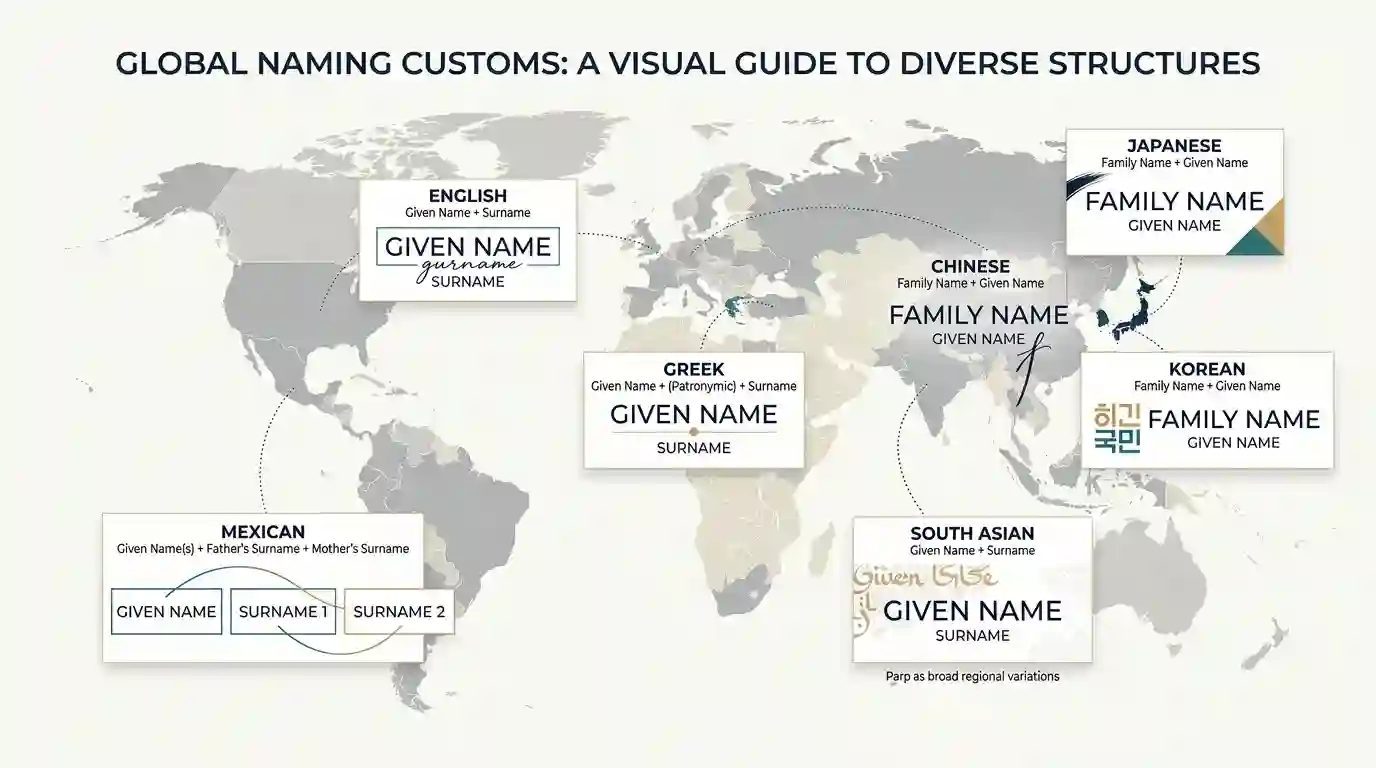
For example, understanding do Mexicans have middle names requires recognizing the two-surname tradition rather than assuming every second name is an American-style middle name.
The question do Indians have middle names involves regional, religious, and linguistic differences.
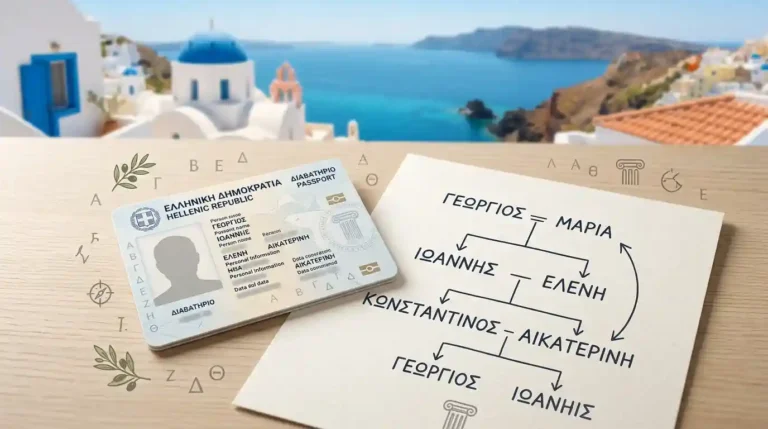
Likewise, do Greeks have middle names involves distinctions between given names and parent-name identifiers.
French traditions can include multiple given names, as explained in middle names in French.
A small element can also be misunderstood. Something that looks like a de middle name or prompts the question is bin a middle name may actually serve a completely different linguistic or family function.
For a broader comparison, see what cultures have middle names.
Why You Should Not Assume Someone’s Gender From Their Name
A person’s name can provide cultural clues, but it is not proof of gender identity.
Someone named:
Jordan
might be a man, woman, or nonbinary person.
The same is true of many names such as:
- Taylor
- Morgan
- Riley
- Avery
- Casey
Even strongly gendered names cannot tell you with certainty how someone identifies.
A person’s gender identity should come from the person—not from assumptions based on a name.
This becomes particularly important in multicultural workplaces, schools, social media, and international communities.
Names can also be unfamiliar, so checking name pronunciation is often more useful than guessing someone’s background or gender.
How Do Social Expectations Influence Gendered Names?
Gendered naming does not develop separately from society.
Names reflect cultural ideas about what boys and girls are expected to be.
How Gender Roles and Stereotypes Affect Naming Choices
Parents may consciously or unconsciously choose names that fit cultural expectations.
Traditionally masculine names may evoke ideas such as:
- leadership
- strength
- independence
- toughness
Traditionally feminine names may evoke:
- beauty
- warmth
- gentleness
- elegance
These are gender stereotypes, not facts about the people who carry the names.
But when millions of parents make choices within the same cultural environment, those preferences can create recognizable patterns.
A name becomes “masculine” partly because people repeatedly choose it for boys.
Then its existing masculinity becomes another reason future parents choose it for boys.
Gender associations can therefore reinforce themselves.
How Names Can Reflect Identity, Family Values, or Social Status
Parents do not choose names only because of gender.
A name can communicate:
- family tradition
- religion
- ethnicity
- region
- social aspirations
- cultural identity
- perceived social status
In certain historical settings, particular names have been associated with nobility, specific religious communities, or particular social groups.
Researchers may even find statistical connections between naming preferences and factors such as geography, social class, education, or political ideology.
But a person’s name should never be used to infer that individual’s politics or beliefs.
Statistical trends describe populations, not individual people.
Family tradition can also override broader gender trends.
Parents may choose a name because it belonged to an important relative even when its contemporary associations have changed.
The same principle applies when deciding why do we have middle names: names often preserve relationships and family identity rather than simply following current fashion.
How Associations With Traits Such as Strength or Softness Develop
A name can begin to sound strong or soft because of several overlapping factors:
- phonetics
- famous people
- historical usage
- name meaning
- fictional characters
- gender stereotypes
Suppose several generations associate a particular sound pattern with boys.
That sound may gradually feel “strong” because people already associate masculinity with strength.
The process can then run in both directions:
masculine names → perceived strength
and
strength-associated sounds → perceived masculinity
This illustrates why sound symbolism should be treated carefully.
The associations are partly cultural feedback loops.
How Do Names Shift Between Genders Over Time?
Some of the clearest evidence that names are socially gendered comes from historical baby-name data.
If gender belonged inherently to a name, the same name should retain the same classification forever.
That does not happen.
Why Some Traditionally Masculine Names Become More Common for Girls
One common pattern in U.S. naming history has been a traditionally masculine name becoming increasingly used for girls.
The transition can happen because:
- its sound becomes fashionable in girls’ names
- celebrities or fictional characters influence usage
- parents begin viewing surnames as feminine given names
- neighboring names with similar sounds become popular
- gender-neutral naming becomes fashionable
Research on long-term U.S. data suggests that some apparent shifts are better understood as changes in broader naming tastes rather than one sex simply “taking” a name from another.
For example, names ending with a long -ee sound became increasingly associated with girls during certain periods, affecting how existing names with similar endings were perceived.
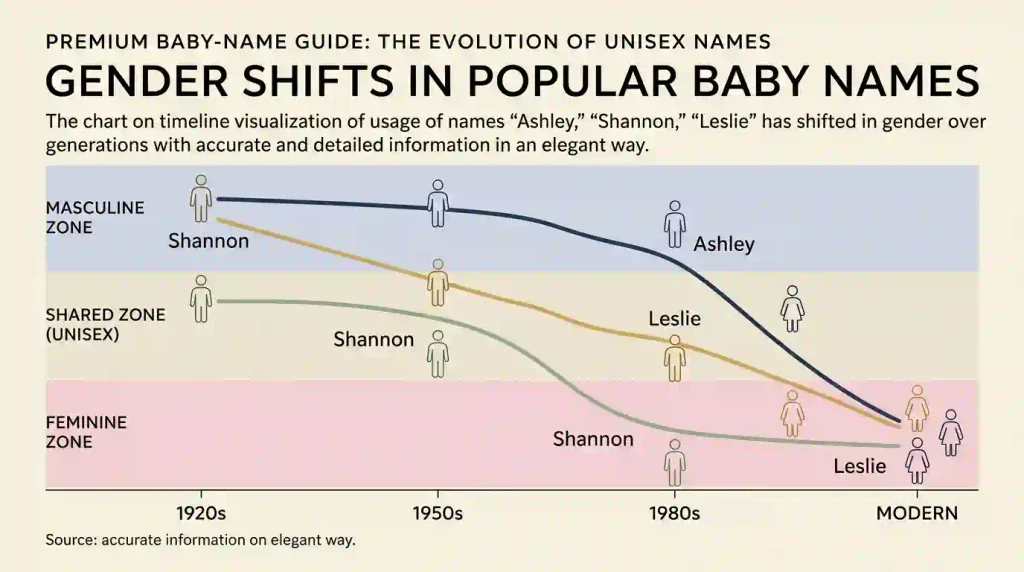
Ashley: A Name That Shifted From Boys to Girls
Ashley is one of the most dramatic examples.
In early U.S. records, Ashley was primarily used for boys.
During the 20th century, girls increasingly received the name.
By the 1960s, female usage had overtaken male usage.
Then the change accelerated dramatically.
In the 1980s, Ashley became one of the most popular girls’ names in the United States, ranking among the decade’s leading choices.
Male usage did not disappear completely, but the cultural perception had changed.
To many Americans born in or after that period, Ashley now sounds strongly feminine.
Yet its earlier history tells a different story.
This makes Ashley powerful evidence that gender associations are learned and historically changeable.
Shannon and Leslie: Names With Changing Gender Associations
Shannon followed another interesting path.
Early American records show comparatively masculine use, but female usage expanded during the 20th century.
By the 1970s, Shannon was enormously more common among girls than boys, although it continued to be used for both.
Leslie shows a similar transformation.
In early 20th-century U.S. records, it appeared much more frequently among boys.
By the middle of the century, female usage had overtaken male usage.
It eventually became perceived by many Americans as primarily feminine, while remaining historically and technically usable for boys.
These shifts show that a name can belong to different cultural categories depending on the generation asking the question.
Names in Transition, Shared Names, and Names That Faded
Not every shared name eventually becomes exclusive to one gender.
Some names remain relatively stable as unisex names.
Others move toward one gender and later decline for everyone.
Still others disappear from widespread use before a clear shift occurs.
This makes naming history more complicated than a simple one-way model.
Names may:
- remain masculine
- remain feminine
- remain gender-neutral
- shift toward girls
- shift toward boys
- rise for both genders
- fall for both genders
A name’s gender category is therefore best viewed as a pattern of use at a particular place and time.
Can Names Shift From Feminine to Masculine?
Yes, in principle.
A name’s cultural association can change in any direction.
However, in modern U.S. naming history, the most famous examples often involve names originally associated more strongly with boys becoming shared and then increasingly feminine.
The reverse pattern has been less prominent.
One possible reason is that societies have not always treated masculinity and femininity symmetrically. Parents may have historically been more willing to give girls names perceived as masculine than to give boys names strongly perceived as feminine.
But this is a cultural pattern, not an unbreakable rule.
As gender expectations change, future naming patterns can change too.
How Can You Check a Name’s Gender Trend in the United States?
Instead of relying on memory or baby-name websites alone, you can examine historical records.
The U.S. Social Security Administration maintains one of the most useful public baby-name datasets.
How to Compare a Name’s Use Across Different Years
Visit the Social Security Administration baby-name database and search the same name separately under boy and girl records.
Compare:
- rankings
- number of births
- different decades
- peak years
- recent use
For example, a name might rank:
#150 for boys in 1950
but later:
#20 for girls in 1980
That is much more informative than simply labeling the name “unisex.”
A historical chart can show the direction of change.
How to Interpret Baby-Name Popularity Data
A ranking measures popularity within the recorded sex category, not how masculine or feminine the name inherently is.
Suppose a name ranks:
#300 among boys
#700 among girls
That tells you that the recorded name was more frequent among boys in that year.
It does not prove that girls cannot use it.
Birth counts also matter.
A ranking difference may look dramatic when actual usage is small.
Look at both:
rank + number of births
whenever possible.
Why Recorded Usage Does Not Define a Name’s Gender
SSA data is extremely valuable, but it has limits.
Its historical baby-name information comes from Social Security card applications and categorizes names by the sex recorded in those data.
It does not measure:
- later gender identity
- how people personally describe their names
- whether a name is culturally neutral outside the U.S.
- whether parents intended the name as masculine or feminine
- every birth in the earliest historical periods
It also treats spelling variants separately.
For example, two names that sound nearly identical may receive separate rankings because their spellings differ.
So use the data to understand usage patterns, not to impose identities on individuals.
What Is the Difference Between Gendered, Gender-Neutral, and Nonbinary Names?
These terms are related but should not be treated as synonyms.
What “Gendered” Means When Describing a Name
A gendered name is one that a particular culture strongly associates with one sex or gender category.
For example, in contemporary U.S. usage:
James
has a strong masculine association.
Sophia
has a strong feminine association.
Those associations describe social usage.
They do not mean the sounds themselves possess gender.
How Gender-Neutral and Unisex Names Differ
Gender-neutral names and unisex names are often used interchangeably.
Both generally describe names used for more than one gender.
Examples commonly regarded as gender-neutral in English include:
- Jordan
- Taylor
- Casey
- Riley
- Morgan
Some people use “unisex” mainly for names with substantial historical usage among both boys and girls.
“Gender-neutral” may place more emphasis on the absence of a strong gender signal.
In ordinary baby-name discussion, however, the distinction is flexible.
What Nonbinary Naming Means
A nonbinary name should not be treated as a fixed linguistic category in the same way as “historically masculine” or “historically feminine.”
Nonbinary people can use any name.
Some choose traditionally masculine names.
Some choose traditionally feminine names.
Others choose gender-neutral names, newly created names, nature names, surname names, or names with very few existing gender associations.
The important distinction is:
A nonbinary person makes a name part of a nonbinary identity; the name itself does not need to belong to a predetermined list of “nonbinary names.”
This is why you should not determine someone’s gender identity from a name alone.
Why Some Families Choose Names With Fewer Gender Associations
Parents may intentionally select a gender-neutral name because they:
- like the sound
- value flexibility
- want something modern
- prefer surname-style names
- want to avoid rigid stereotypes
- have a family name used across genders
This can sometimes be described as gender-creative naming.
Other parents simply choose a name they love and do not think of the gender-neutral quality as particularly important.
For parents comparing these considerations, how to choose a baby name can help balance meaning, pronunciation, family tradition, popularity, and long-term usability.
If you are building a full name, how to pick a middle name and what is a middle name can help with the next step. Families considering longer combinations may also find can you have two middle names useful.
What Do Gendered Naming Trends Reveal About Society?
Names are tiny cultural records.
When thousands of families independently make naming decisions, the resulting patterns can reveal broader changes in values and expectations.
How Changing Gender Roles Influence Naming Patterns
Societies change.
Expectations surrounding masculinity and femininity change with them.
As those boundaries become less rigid, naming conventions may also become more flexible.
Parents may become more comfortable with:
- surname names for girls
- nature names for boys
- gender-neutral names
- names previously associated with another gender
The process is gradual.
No single family changes an entire naming system.
But collectively, many individual choices can alter how a generation hears a name.
What Shared and Shifting Names Can Tell Us About Cultural Expectations
Ashley, Shannon, Leslie, and other shifting names demonstrate something important:
Gender associations are historical patterns, not permanent properties of names.
The same applies across languages.
The changing popularity of Japanese -ko names, growing interest in gender-neutral Korean names, and evolving gender associations in Chinese given names all show that naming systems move with society.
Sound matters.
Meaning matters.
History matters.
But repeated cultural use matters most.
For parents choosing a boy’s name, this means a label such as “masculine” should be understood as a description of current or historical usage—not a prediction of who your child will become.
Explore our Naming Guides if you want to understand how names work across families, languages, and cultures.
Frequently Asked Questions About Gendered Names
Why are names gendered?
Names become gendered because cultures repeatedly associate certain names, sounds, meanings, and naming patterns with boys or girls.
Do names have genders?
Names do not have biological gender, but societies can give them strong masculine, feminine, or neutral associations.
What makes a name feminine?
Frequent use for girls, cultural tradition, meaning, spelling, vowel endings, syllable patterns, and familiar feminine name structures can all contribute.
What makes a name sound masculine?
Shorter structures, certain consonants or vowels, traditional male usage, meanings, and cultural familiarity may create masculine associations.
Can a name be gender-neutral?
Yes, many names are used substantially across genders or carry relatively weak gender associations.
Is a unisex name the same as a gender-neutral name?
The terms often overlap, although “unisex” sometimes emphasizes actual usage across genders while “gender-neutral” emphasizes perception.
What are some gender-neutral names?
Jordan, Taylor, Morgan, Riley, and Casey are familiar examples in modern English-speaking contexts.
Can a traditionally male name become female?
Yes; Ashley and Leslie are well-known U.S. examples of names whose usage shifted strongly toward girls.
Can a traditionally female name become male?
It can happen, although prominent female-to-male shifts have historically been less common in modern U.S. naming data.
Was Ashley originally a boy name?
Early U.S. usage was predominantly masculine before Ashley became overwhelmingly associated with girls later in the 20th century.
Was Leslie originally a male name?
Leslie had substantial historical male usage and was much more male-associated in early U.S. records than it is today.
Is Shannon a boy or girl name?
Shannon has been used for both, although U.S. usage became much more strongly associated with girls during the later 20th century.
Why do some female names end in A?
Many languages developed feminine forms ending in -a, which helped make the ending feel feminine in those linguistic traditions.
Does ending in A always make a name feminine?
No; endings must be interpreted according to the language and culture involved.
Do sounds really affect how gendered a name seems?
Research suggests that phonetics can influence gender perception statistically, but sound is only one factor.
Do voiced sounds make names masculine?
Some studies found stronger masculine associations for voiced initial phonemes, but this is a statistical tendency rather than a rule.
Are longer names more feminine?
English-language data have often shown feminine names averaging more syllables, but many exceptions exist.
Are Japanese names ending in -ko always female?
The suffix became strongly associated with women’s names in modern Japanese history, but its historical use is more complex and the pattern has changed over time.
Can Chinese names be gender-neutral?
Yes, many Chinese given names do not allow gender to be identified confidently from the name alone.
Are Korean names gendered?
Some are strongly associated with one gender, while others are shared, and gender-neutral usage has changed over time.
Can a person’s name tell you their gender identity?
No; a name can suggest cultural usage patterns but cannot reliably tell you how an individual identifies.
Should I avoid a name because it is becoming unisex?
Not necessarily; the important question is whether you like the name and are comfortable with its current and possible future associations.
Does a baby-name ranking prove whether a name is male or female?
No, rankings show recorded usage patterns for a particular place and time.
Can names change gender more than once?
Yes, cultural associations can continue evolving as naming fashions change.
Does a name affect a child’s personality?
A name does not determine personality, although it may influence social perceptions or personal associations.
Final Thoughts
So, why are names gendered? Masculine, feminine, and gender-neutral associations develop through repeated cultural use, language, phonetics, meanings, family traditions, and social expectations. Even apparently obvious gender signals can change: Ashley, Shannon, and Leslie demonstrate how a name’s U.S. usage can shift dramatically within a few generations.
Research on sound symbolism shows that pronunciation and structure can influence how names are perceived, but those tendencies are neither universal nor destiny. Culture remains crucial, and a person’s name should never be treated as proof of gender identity.
For parents choosing a baby boy’s name, historical usage can be useful without becoming a restriction. Browse Boy Names for ideas, and use our broader Naming Guides to compare meaning, culture, pronunciation, and naming traditions before deciding.