What Cultures Have Middle Names? Naming Traditions Around the World
Summary
If you are wondering what cultures have middle names, the answer reaches far beyond the familiar American first–middle–last pattern. Middle names and additional given names appear in many English-speaking and European societies, while other communities use a maternal surname, a patronymic, or another meaningful name component. These elements may occupy a similar position on paper but serve very different purposes. A Filipino middle name commonly preserves the mother’s family surname, a Russian patronymic identifies a parent, and a Chinese generational character belongs within the given name rather than functioning as a separate Western middle name. Understanding these differences can help you choose a meaningful name for your son, interpret family records, and avoid mistakes on official forms. This guide explains naming traditions around the world with clear examples and practical comparisons. You will also learn how cultural heritage, religion, family connections, pronunciation, and personal preference influence naming choices. Whether you want to honor your ancestors or combine two family backgrounds, start by understanding what each part of a name actually represents.
Table of Contents
- Which Cultures Use Middle Names? A Quick Answer
- Understand What Counts as a Middle Name
- How Middle Names Developed Through History
- Middle Names in English-Speaking Cultures
- Additional Given Names and Surnames in Spanish-Speaking Cultures
- Naming Traditions in Portugal and Brazil
- Patronymics and Additional Names in European Cultures
- Scandinavian Middle Names and Additional Given Names
- Middle Names and Related Naming Practices in Asian Cultures
- Middle Names in Filipino Naming Traditions
- Middle Names in Vietnamese Naming Traditions
- Arabic and Turkish Naming Traditions
- African Naming Traditions and Additional Names
- Indigenous Naming Traditions
- How to Identify Each Part of a Cultural Name
- Common Misconceptions About Cultural Middle Names
- Religious Names and Legal Middle Names Are Not Always the Same
- Why Families Give Children Middle Names
- How Middle Names Are Used in Everyday Life
- Middle Names in Records, Forms, and Family Research
- Choose a Middle Name That Respects Your Family’s Traditions
- Choosing a Boy’s Middle Name in a Multicultural Family
- Check How the Complete Name Works
- How Middle-Name Traditions Are Changing
- Frequently Asked Questions
- Final Thoughts
Which Cultures Use Middle Names? A Quick Answer
Middle names are familiar in the United States, United Kingdom, Ireland, Canada, Australia, and New Zealand. Additional given names also occur in many European and Latin American communities. However, calling every extra name a “middle name” can hide important cultural differences.
When asking what countries have middle names, remember that countries contain many communities. A national label offers a starting point, but language, religion, ancestry, and family practice often explain more.
Compare Additional Given Names, Maternal Surnames, and Patronymics
The following comparison describes common patterns, rather than rules that apply to everyone.
| Cultural context | Common additional name component | Main distinction |
| English-speaking societies | Chosen middle given name | Often selected for family connections, meaning, or sound |
| Spanish-speaking societies | Additional given names and two surnames | A second surname remains a family name |
| Portugal and Brazil | Additional given names and multiple surnames | Several words may belong to the surname structure |
| Russia and some related traditions | Patronymic | Derived from a parent’s given name |
| Philippines | Maternal family surname in the middle-name position | Usually a surname rather than another given name |
| Vietnam | Middle-name element between surname and given name | Its function differs from an English middle name |
| China | Sometimes a generational character within the given name | Usually not an independent middle name |
| Denmark and Norway | Additional given names or surname-based middle names | Local terminology distinguishes these components |
| Iceland | Additional given names, sometimes a registered middle name, and usually a parental surname | A patronymic or matronymic is a separate component |
Cultures Without a Separate Middle-Name Tradition
Mainstream Japanese and Korean naming structures generally use a family name and a given name, without a separate English-style middle-name category. Many Chinese names follow the same broad two-component structure.
That does not mean people from these backgrounds cannot have middle names. International families, migration, and individual choices can produce different arrangements. The relevant question is whether the tradition recognizes a separate middle-name function.
Why Naming Practices Differ Within the Same Country
Religion, ethnicity, region, and generation all influence names. Indian naming traditions illustrate this especially well: a name might contain a parental name, family surname, religious identifier, or initials depending on the community.
The United States is similarly diverse. American naming traditions include inherited European practices alongside Indigenous, African, Asian, Latin American, and other family traditions.
Understand What Counts as a Middle Name
Before choosing your son’s name, identify which naming structure your family uses. Our guide to what is a middle name introduces the familiar English-language definition, but that definition does not describe every culture.
Middle Names, Additional Given Names, and Family Names
A given name identifies an individual. A surname usually connects that person to a family, although not every naming system uses hereditary surnames.
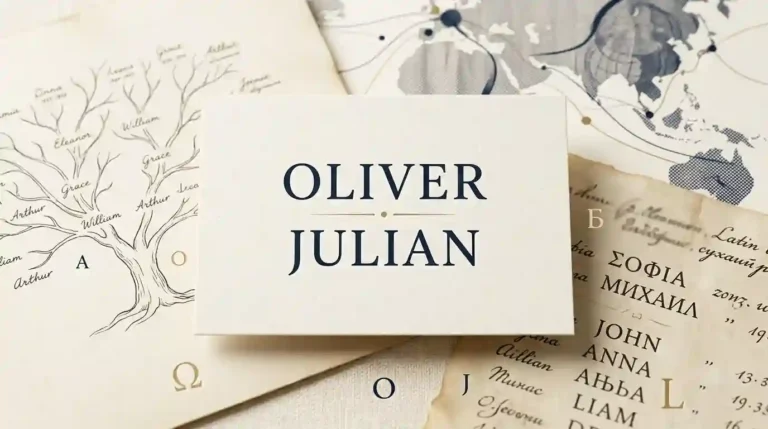
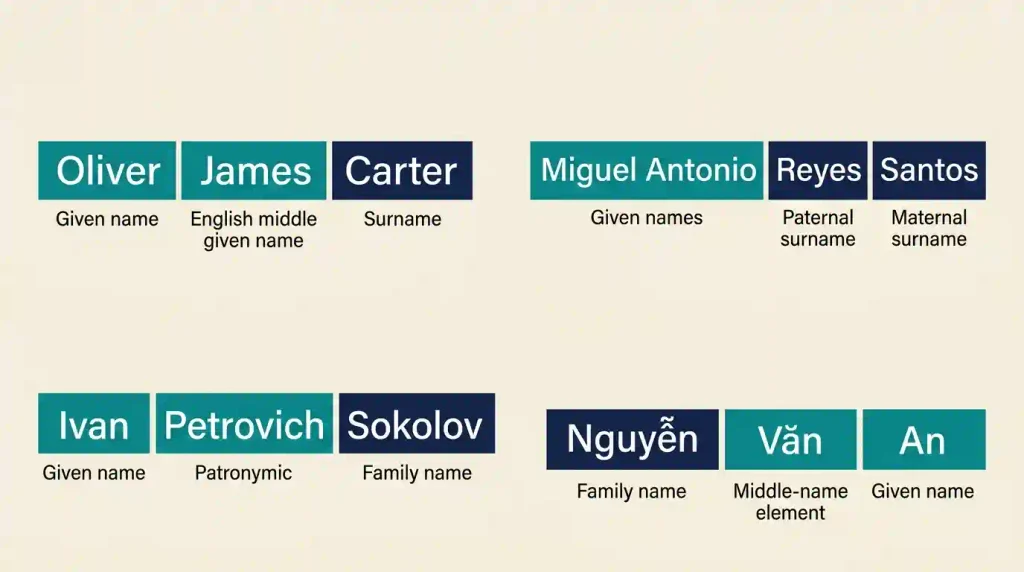
In “Oliver James Carter,” Oliver is the first given name, James is the middle given name, and Carter is the surname. In another tradition, the word between the first and last components might instead identify a parent or preserve a maternal surname.
The broader question of what is a name therefore includes identity, relationships, language, and social usage.
How Patronymics Differ From Chosen Middle Names
A patronymic is derived from a parent’s name, traditionally the father’s. A matronymic derives from the mother’s name.
Parents might freely choose James as an English middle name. A Russian patronymic such as Ivanovich, however, indicates a relationship to a father named Ivan. It carries genealogical information rather than simply occupying an optional naming slot.
Why a Name’s Position Does Not Always Explain Its Function
Position can be misleading because name order varies. Some traditions place the surname first, while others place it last. Additional surnames can also appear after a given name.
Likewise, particles such as “de” may belong within a surname or compound given name. Our de middle name guide explains why a small connecting word should not automatically become a separate name field.
How Middle Names Developed Through History
There is no single historical event that explains every modern middle name. Several naming practices developed separately, then influenced one another through religion, migration, and record keeping.
Early Personal Names and Ancient Roman Naming Structures
Ancient Roman male naming sometimes used the tria nomina: praenomen, nomen, and cognomen. These components identified the individual, family group, and an additional branch or distinction.
Although this looks like a three-part modern name, its functions differed. The nomen occupied the middle position but was closer to a family identifier than a freely chosen middle given name. It is better understood as a historical comparison than a direct equivalent.
Medieval Italian Naming and Saints’ Names
Additional given names appeared among some families in medieval Italy. Religious devotion and family identity could both influence these choices.
Giving a child more than one name allowed parents to preserve a preferred personal name while also honoring a saint or another important connection. These practices contributed to later European multiple-name traditions.
Religious Influences, Baptismal Names, and Confirmation Names
Baptismal names and saints’ names offered spiritual significance in Christian communities. A name could express devotion, mark religious belonging, or connect a child with a feast day.
Confirmation names developed in particular religious settings, but they are not automatically legal middle names. Whether a religious name appears in civil records depends on family choices and local practice.
Renaissance Naming Among Nobility and Wealthy Families
Among some Renaissance families, multiple names could communicate ancestry, religious affiliations, and connections between important households.
European nobility helped make elaborate names socially visible. However, a naming practice associated with wealthy families in one region might remain uncommon elsewhere. Historical patterns should always be connected to a place and period.
The Spread of Middle Names Across European Social Classes
Over time, additional given names became more familiar beyond aristocratic families. Religious records, population growth, migration, and social imitation all helped shape adoption.
The spread was uneven. France, Britain, Germany, and other societies followed different timelines. For a related perspective, explore middle names in french, where multiple given names require careful interpretation.
Adoption in Britain and Other English-Speaking Societies
British naming traditions gradually incorporated more additional names, including names honoring relatives and maternal family lines.
Migration carried these practices into other English-speaking settings. Local families then adapted them to their own communities. The question why do we have middle names is therefore partly about how inherited customs gain new purposes.
American Middle Names, Government Records, and Middle Initials
American middle-name usage expanded as family customs, immigration, and official record keeping developed. German immigration was one influence among several.
A middle initial became a familiar way to distinguish people with similar names while keeping a written name brief. Government and institutional forms helped normalize this presentation, although an initial alone does not explain the full name’s cultural meaning.
Middle Names in English-Speaking Cultures
English-speaking naming traditions often give parents considerable flexibility. A boy’s middle name might honor his grandfather, preserve a surname, or simply be another name his parents appreciate.
United States: Family Names, Personal Choice, and Middle Initials
In the United States, a middle name commonly sits between the first given name and surname. James, Lee, Alexander, and other familiar choices can serve this role, but families are not limited to a traditional list.
Some parents choose a maternal surname or a heritage name. Others use no middle name. Our discussion of middle names in the us explores these everyday differences.
United Kingdom and Ireland: Heritage and Family Connections
British and Irish naming traditions often use additional given names to honor relatives, maintain family connections, or reflect religious influences.
A child may have one, several, or no middle names. Irish-language names can also preserve linguistic heritage, whether they appear as first names or additional given names. Family practice matters more than a supposed national requirement.
Canada, Australia, and New Zealand: Diverse Naming Influences
Canadian naming traditions reflect multiple linguistic and cultural backgrounds, including English-speaking and French-speaking communities. Australian naming traditions and New Zealand naming traditions likewise include diverse family practices.
Parents may combine familiar local names with names from their heritage languages. Indigenous naming customs must also be understood within their specific communities rather than absorbed into a general English-speaking model.
Additional Given Names and Surnames in Spanish-Speaking Cultures
Spanish naming traditions commonly distinguish given names from surnames inherited through parental lines. This distinction is essential when interpreting a name with four or more words.
Spain: Multiple Given Names and Two Family Surnames
A person may have one or more given names followed by two surnames. In an illustrative name such as “Juan Carlos García López,” Juan Carlos consists of given names, while García and López are surnames.
The surname order and registration choices should be checked rather than assumed. Contemporary family choices and official arrangements can differ from a simplified paternal-then-maternal description.
Argentina: Combined Given Names and Family Traditions
Argentine naming traditions include children with one or several given names. Parents may choose combinations for family significance, religious meaning, or personal preference.
Surname usage also varies. An Argentine person’s second word should not automatically be treated as a middle name, particularly when the complete name has been shortened in informal use.
Costa Rica: Given Names and Parental Surnames
Costa Rican naming traditions commonly preserve surnames from both parental lines. A person may also have multiple given names.
For a boy called “Luis Andrés,” both words may be used together in daily conversation, or one may become the usual form of address. The surnames remain separate family components regardless of how many given names appear.
Dominican Republic: Naming Customs and Family Identity
Dominican naming traditions combine inherited surname structures with varied given-name choices. Some families favor religious names, while others create names or combine elements from relatives’ names.
This creativity does not remove the distinction between given names and family surnames. A short everyday name can represent only part of a longer official identity.
Distinguishing a Second Given Name From a Second Surname
Ask which components the person considers given names and which are surnames. Do not infer the answer from word count.
The same issue arises when readers ask do mexicans have middle names. Additional given names can resemble English middle names, while a maternal surname remains part of the surname structure.
Naming Traditions in Portugal and Brazil
Portuguese naming traditions and Brazilian naming traditions often include more than one given name and several surname components. Consequently, a long full name may contain fewer given names than an English-speaking reader expects.
Portuguese Additional Given Names and Family Names
Portuguese names can combine given names with family names from different branches of the family. Particles such as “de,” “da,” and “dos” may belong within these components.
Avoid assigning every word before the last one to a middle-name field. Identify the complete given-name group and surname group first, then follow the form’s instructions.
Brazilian Full Names and Ancestral Connections
Brazilian full names may preserve several family connections. A second given name and multiple surnames can appear together, producing a name with many words.
Maternal surnames often precede paternal surnames, but order can vary. The final word alone may not adequately represent the person’s family name, especially when compound surname components need to remain together.
Patronymics and Additional Names in European Cultures
European naming systems share some historical influences, but they are not interchangeable. A Russian patronymic, a Polish additional given name, and an Icelandic parental surname have different roles.
Russia and Related Slavic Traditions: Names Derived From a Parent
Russian naming traditions commonly use a given name, patronymic, and family surname. Formal address often combines the given name and patronymic.
Some other Slavic naming traditions also use patronymics, but formation and everyday usage differ. Do not apply Russian endings or address customs to every Slavic language. Gendered surnames may introduce further differences between relatives’ recorded names.
Iceland: Patronymics, Matronymics, and Given Names
Icelandic naming traditions commonly use a surname derived from a parent’s given name. A child’s surname may therefore differ from a parent’s surname without indicating an unrelated family.
Icelanders can also have additional given names, and Iceland recognizes a distinct registered middle-name category. It is inaccurate to say that everyone in Iceland has only two names or that middle names cannot exist there.
Greece: Family Naming and Religious Traditions
Greek naming traditions often connect a child’s given name with grandparents, saints, and Orthodox Christianity. Name-day celebrations can carry strong personal and religious importance.
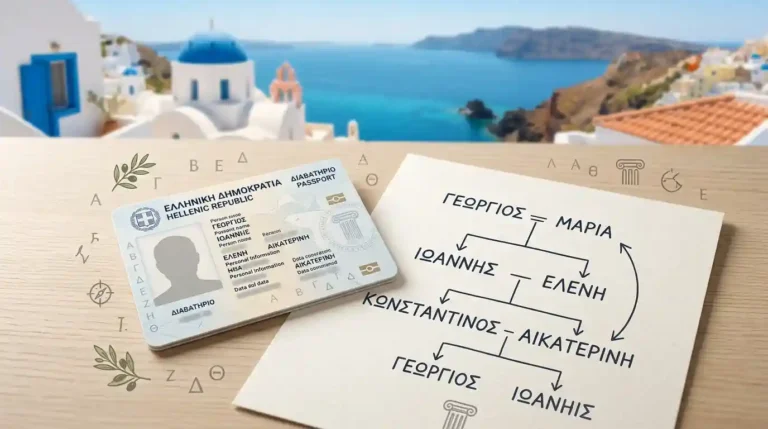
A father’s name may also appear in administrative contexts without functioning like a chosen English middle name. Our guide to do greeks have middle names explains this distinction in more detail.
Poland: Additional Given Names and Naming Customs
Polish naming traditions allow additional given names, although many people use only one in ordinary conversation.
Family preferences, religious associations, and personal taste influence these choices. Certain surname forms also vary by gender. When researching a family tree, related surname spellings may therefore belong to the same family rather than different lineages.
Romania: Family and Religious Naming Influences
Romanian naming traditions can include one or more given names. Parents may draw inspiration from relatives, saints, or names they simply enjoy.
Compound and hyphenated given names also occur. A second given name may be used regularly or reserved mainly for official records, depending on the individual and family.
Scandinavian Middle Names and Additional Given Names
The English phrase “middle name” does not map neatly onto every Scandinavian naming category. Translating local terminology literally can create confusion.
Distinguish Additional Given Names From Surname-Based Middle Names
A person may have several given names but use only one as their everyday calling name. Separately, a surname-based name may appear before the final surname.
These components perform different functions. One offers another personal name; the other preserves a family connection. Both can occupy the visual middle of a full name without belonging to the same category.
Compare Naming Terminology in Denmark, Norway, and Sweden
Denmark and Norway distinguish surname-based middle names from additional given names. Sweden historically recognized a surname-based mellannamn category.
Swedish law changed in 2017, ending the creation of new middle names under that former category while allowing existing ones to remain. Additional given names are a separate matter. These details show why local terminology deserves attention. Skatteverket
Middle Names and Related Naming Practices in Asian Cultures
Asian naming traditions encompass many languages and communities. The absence of a Western middle-name slot does not make these names less detailed or meaningful.
China: Generational Characters Within Given Names
Chinese naming traditions generally place the family name before the given name. Some families use a generational character shared by relatives of the same generation.
That character belongs within the given name. It may express family continuity, but it should not automatically be treated as an independent middle name, especially when the given name is written with multiple romanized syllables.
Chinese Names Adapted to English-Speaking Contexts
A Chinese person may adopt an English given name for school, work, or international use. Some people combine this with their Chinese name in official or everyday settings.
Families in the diaspora may also give a child an English first name and Chinese middle given name. This is a family adaptation, rather than proof that traditional Chinese naming uses the American structure.
Japan: Given Names, Family Names, and Kanji Meanings
Japanese naming traditions generally use a family name and a given name. Many given names are written with kanji, whose meanings and readings contribute to the name’s significance.
A name containing several kanji is not necessarily several names. International families may use additional names, but the standard Japanese structure does not require an English-style middle name.
Korea: Family Names and Given-Name Structure
Korean naming traditions typically place the family name first. A given name often contains two syllables, although other forms occur.
Those two syllables usually belong to one given name. Confucianism, family relationships, and Chinese-character meanings have influenced some traditions, but contemporary families also choose names using different linguistic and personal approaches.
India: Regional, Religious, and Astrological Naming Traditions
Indian naming traditions vary substantially by language, region, religion, and community. Some names contain a father’s given name; others include a family surname, religious identifier, or initials.
Astrology influences naming in some Hindu families, but it does not explain every Indian name. Readers asking do indians have middle names should begin with the family’s specific naming system.
Indian Naming Examples by Region and Community
In some Marathi naming patterns, a parental given name appears between the individual’s given name and surname. Some Tamil naming patterns instead use a parental initial, without a hereditary surname.
Sikh names may include Singh or Kaur, with other components varying by family. These examples demonstrate diversity; they should not become assumptions about every person from a region or religion.
Bali: Birth-Order Names and Personal Naming Customs
Balinese naming traditions can use names associated with birth order alongside other personal components. Social background, gender, religion, and family preference may also influence the complete name.
A birth-order name is not automatically a middle name. Understanding what each component communicates is more helpful than trying to force the name into three English-language boxes.
Middle Names in Filipino Naming Traditions
Filipino names provide one of the clearest examples of a middle name that commonly functions differently from an English middle given name.
The Maternal Surname’s Role in the Full Name
In a common Filipino pattern, the mother’s family surname appears between the child’s given name or names and paternal surname.
For an illustrative boy named “Miguel Antonio Reyes Santos,” Miguel Antonio can be the given-name group, Reyes the maternal surname used as a middle name, and Santos the paternal surname. Actual family arrangements should always be confirmed.
Distinguishing a Filipino Middle Name From a Second Given Name
In that example, Antonio is an additional given name, while Reyes is the middle name in the Filipino sense.
An American form might tempt someone to put Antonio alone in the middle-name field. That could misrepresent the intended structure. Keep the distinction clear, particularly when entering school, medical, or identity records.
Variation Across Families and Cultural Communities
The Philippines includes diverse religious and cultural communities. Muslim Filipino names, Indigenous naming traditions, international families, and different parental circumstances may follow other arrangements.
The maternal-surname pattern is common, but it is not a universal description of every Filipino person. The individual’s documents and own explanation provide the most reliable starting point.
Middle Names in Vietnamese Naming Traditions
Vietnamese names commonly place the family surname first, followed by a middle-name element and given name. However, full names can contain different numbers of components.
Understand Family–Middle–Given Name Order
In the illustrative name “Nguyễn Văn An,” Nguyễn is the surname, Văn is a middle-name element, and An is the given name.
A person with this structure would generally be addressed by the given name rather than the surname in familiar use. English-language readers should therefore avoid assuming that the first written word is the personal calling name.
Traditional Middle-Name Elements and Their Functions
Traditional middle-name elements can communicate gender, family connections, or other meanings. Văn and Thị are familiar examples, although naming choices are broader today.
These elements do not always offer an alternative everyday name in the way an English middle given name might. Their function depends on the complete name and the person’s usage.
Modern Variation and Names With Multiple Components
Contemporary Vietnamese names may contain multiple middle elements or compound given names. Some people have no separate middle-name element.
Spacing alone cannot reliably identify the boundaries. When recording a Vietnamese name, ask which elements form the surname and given name rather than mechanically assigning each word to a different field.
Arabic and Turkish Naming Traditions
Arabic naming traditions and Turkish naming traditions should be discussed separately. Shared religious influences do not create a single naming system.
Arabic Names: Parental Names, Lineage, and Family Connections
Arabic names may include a given name, parental names, family name, and other components. Ibn means “son of,” while bint means “daughter of.” A nisba can indicate an association with a place, group, or background; a kunya identifies someone through parenthood.
These elements differ from a freely chosen middle name. Our guide to is bin a middle name explains the related issue of lineage markers appearing within a name.
Islam influences many naming choices, but Arabic language, religion, and nationality are not interchangeable categories.
Turkish Given Names and Family Naming Practices
Modern Turkish names generally include one or more given names and a family surname. A second given name may resemble an English middle name, although the person’s preferred everyday usage can differ.
Parents may choose names associated with language, history, relatives, or religion. Having a Muslim background does not mean a Turkish name follows an Arabic patronymic chain.
African Naming Traditions and Additional Names
African naming systems are highly diverse. Discussing specific communities is more accurate than presenting a continent-wide rule about middle names.
Ghana: Akan Day Names and Other Personal Names
Akan naming traditions include day names associated with the day of birth. A child may also receive other names connected with relatives, circumstances, or family preference.
An Akan day name is not inherently a middle name. It may function as a given name or appear elsewhere within a broader name arrangement, including combinations with Christian or other names.
Nigeria: Yoruba Name Meanings and Naming Ceremonies
Yoruba naming traditions often give substantial importance to name meaning. Names may express a prayer, birth circumstances, family experience, or hopes for the child.
Naming ceremonies can involve relatives and community members contributing names. Practices vary among families, including the timing and religious setting. Multiple names should therefore be interpreted through their actual use, not a fixed three-part template.
How Additional Names Express Family and Cultural Identity
Igbo naming traditions can express spiritual beliefs, gratitude, circumstances, and family expectations. Other Nigerian communities follow their own practices.
Some families combine a heritage name with an English or religious name. Which one becomes the everyday name depends on the family and individual. Additional names can preserve cultural heritage without necessarily being described locally as middle names.
Indigenous Naming Traditions
Indigenous naming customs belong to distinct peoples and communities. They should not be reduced to a universal pattern or treated as a source of decorative baby-name ideas.
Navajo Naming Customs and Personal Identity
Navajo naming traditions can involve personal names, ceremonial significance, and clan relationships. Clan affiliations communicate kinship and belonging, but they are not simply middle names.
Practices differ between families and contexts. Some names or explanations may be private. Respecting that privacy matters more than obtaining a complete translation or trying to reproduce the tradition outside its community.
Private and Public Names in Some Indigenous Australian Communities
Some Indigenous Australian naming practices distinguish names used in different social, ceremonial, or life contexts. Protocols can also govern when particular names may be spoken.
There are many Aboriginal and Torres Strait Islander peoples, each with distinct traditions. Avoid claiming that every community uses secret names or follows the same naming ceremonies.
How to Identify Each Part of a Cultural Name
A useful naming guide should explain how to interpret a name, rather than merely listing places where additional names appear.
Annotated Examples of Given Names and Additional Given Names
The examples below are illustrative, not instructions for parsing every name with the same word count.
| Illustrative full name | Given-name components | Other components |
| Oliver James Carter | Oliver: first given name; James: middle given name | Carter: surname |
| Juan Carlos García López | Juan Carlos: given names | García López: two surnames |
| Miguel Antonio Reyes Santos | Miguel Antonio: given names | Reyes: maternal surname used as middle name; Santos: paternal surname |
| Ivan Petrovich Sokolov | Ivan: given name | Petrovich: patronymic; Sokolov: surname |
| Nguyễn Văn An | An: given name | Nguyễn: surname; Văn: middle-name element |
Annotated Examples of Patronymics and Family Surnames
In “Ivan Petrovich Sokolov,” Petrovich indicates a father named Pyotr. Sokolov is the family surname. The patronymic and surname therefore communicate different relationships.
In an Icelandic name ending in “Jónsson,” that ending commonly identifies the person as a son of Jón. It does not necessarily indicate that the father also uses Jónsson as his surname.
Examples of Name Order Across Cultural Traditions
English names commonly place given names before surnames. Chinese, Japanese, Korean, and Vietnamese names traditionally place family names first, though international presentation can vary.
The World Wide Web Consortium’s guide to personal names around the world offers an authoritative introduction to these differences and their implications for forms.
Common Misconceptions About Cultural Middle Names
Many naming errors begin with a reasonable-looking assumption. Checking the name’s function prevents that assumption from becoming an incorrect record.
Three Words Do Not Always Mean First, Middle, and Last Name
A three-word name might contain a given name and two surnames, a surname and two-part given name, or a given name and parental name.
It may also contain a particle or another component. Counting words is therefore a poor substitute for asking how the person’s name works.
A Two-Part Given Name Is Not Automatically Two Separate Names
A two-part given name may function as a single everyday name. Separating it can change how the person expects to be addressed.
This matters especially when a romanized name contains spaces or hyphens. Those marks may represent a writing convention rather than a division into first and middle names.
A Second Surname Is Not Automatically a Middle Name
In many Latin American naming traditions, two surnames preserve different parental lines. Moving the first surname into a middle-name field can distort the family-name structure.
The practical solution is to keep the surname group intact wherever the relevant system allows, and ask for instructions when its fields do not fit.
A Generational Character Is Not Necessarily a Separate Name
A Chinese generational character can form part of a given name alongside another character. It is not automatically an independently usable personal name.
Transliteration can make this distinction harder to see. The person’s own written name and preferred form of address are more informative than an English reader’s interpretation of spaces.
Religious Names and Legal Middle Names Are Not Always the Same
A person can have a meaningful religious name that does not appear on a passport or birth certificate. Religious and civil identities sometimes overlap, but they need not match word for word.
Religious and Ceremonial Names Used Outside Civil Records
Some Jewish families use a Hebrew name in religious settings alongside a different civil name. Other communities use baptismal, initiation, or ceremonial names for particular purposes.
Ashkenazi naming traditions often honor deceased relatives, while other Jewish communities may follow different customs. These connections do not automatically determine the position of a name in civil records.
When a Religious Name Is Also a Registered Given Name
Parents can choose a saint’s name or another religious name as a first or middle given name from birth. In that situation, it may be both religiously meaningful and legally recorded.
A later confirmation name, however, does not automatically become part of the legal name. Registration and everyday use remain separate questions.
Why Religious Naming Practices Vary Between Communities
Religious traditions operate within different languages, countries, and family histories. Two families sharing the same faith may choose very different name structures.
Gender expectations also vary. Our guide to why are names gendered explores how language and social convention influence which names communities associate with boys or girls.
Why Families Give Children Middle Names
The role of a middle name often combines several purposes. It can preserve an older connection while giving a child something personally meaningful.
Honor Relatives, Ancestors, Godparents, and Friends
An honor name can recognize grandparents, ancestors, godparents, or someone who supported the family. Parents might use the exact name or an established related form.
Before choosing, consider the relationship you want your son to inherit. A name works best as an appreciated connection rather than an obligation that nobody wants to explain.
Preserve a Maternal Surname or Family Line
Maternal surname preservation can keep a family name visible when a child receives a different final surname.
In an English-speaking setting, a mother’s maiden name may become a chosen middle name. In the common Filipino pattern, a maternal surname already has an established middle-name role. Similar-looking results can therefore arise through different traditions.
Express Religious Beliefs and Cultural Heritage
A middle name can express a family’s faith or maintain a connection to a heritage language. It may also carry a name used by earlier generations.
Check pronunciation, meaning, and family context before selecting it. A name’s cultural importance may extend beyond the short definition offered by a baby-name database.
Connect Two Cultural or Religious Backgrounds
Interfaith families and multicultural families sometimes use different given names to acknowledge both parents’ backgrounds.
This can work well when each name has a clear purpose and both parents understand its associations. It is not necessary to place every heritage connection into one full name; stories, language, and family relationships also preserve identity.
Add Symbolism, Values, and Personal Meaning
Names may symbolize courage, peace, gratitude, or another quality parents value. Their personal significance can be stronger than a literal dictionary translation.
When researching what is in a name meaning, separate established etymology from family interpretation. Both can matter, but they should not be presented as the same kind of evidence.
Reflect Birth Circumstances or Geographic Connections
Some names refer to a day of birth, birth order, season, or meaningful place. Others record the family’s circumstances when the child arrived.
These names can create a lasting family story. However, a place name should be chosen with attention to its language and associations, rather than assuming every attractive location name works equally well as a personal name.
Honor Mentors, Heroes, and Inspirational Figures
A teacher, community leader, artist, or historical figure may inspire a middle name. Parents can explain the qualities they admire without expecting their child to imitate that person.
Research prominent associations before deciding. A familiar name may have several namesakes, and the one most recognizable to others may differ from the one your family intends.
Improve the Sound and Rhythm of the Full Name
A middle name can balance a short first name or break up repeated sounds. Some families prioritize this musical quality, while others accept a less polished rhythm to preserve a meaningful name.
There is no universal syllable formula. Say the complete name naturally and decide whether it feels comfortable in your family’s languages.
Provide an Alternative Everyday or Professional Name
A second given name can offer another name your child might choose to use later. That flexibility can be valuable without implying that the first name is inadequate.
This purpose applies most directly to independently usable given names. A patronymic, maternal surname, or Vietnamese middle element may not function as an interchangeable calling name.
Distinguish People With Similar Names
Additional names and middle initials can help distinguish relatives or unrelated people with similar first names and surnames.
They can also support identity verification, although a name alone is not a unique identifier. Accurate spelling and consistent records matter more than adding an extra name solely to make someone distinctive.
How Middle Names Are Used in Everyday Life
A middle name’s official importance and conversational importance can differ. Some people rarely say it; others use it every day.
Formal Documents Compared With Daily Conversation
Full names commonly appear in birth certificates, marriage certificates, academic records, and other formal settings. Everyday introductions often use fewer components.
Which parts can be omitted depends on the context. A casual introduction is different from an application requiring the name shown on an identity document. Follow the relevant instructions rather than assuming conversational usage is sufficient.
Using a Middle Name Instead of a First Name
Some people prefer their middle given name from childhood. Others begin using it later because it feels more suitable.
That preference does not automatically change the official name. It helps to distinguish a legal name from a preferred name so schools, workplaces, and healthcare providers can address the person appropriately while maintaining accurate records.
Public Figures Known by Their Middle Names
Public figures sometimes become known through a middle name or shortened form. Paul McCartney, born James Paul McCartney, is a familiar example.
Such examples show the flexibility of some English-style given-name arrangements. They should not be used to assume that everyone’s middle component can replace the first name in ordinary conversation.
Middle Initials and Abbreviations
A middle initial can stand for an additional given name or another culturally meaningful component. In Filipino usage, it often represents the maternal surname.
An initial may also conceal a longer compound component. When researching records, treat it as a clue rather than assuming you know the full name behind it.
Ask About Someone’s Name Without Making Assumptions
Simple questions work well: “What name would you like me to use?” and “Could you tell me how to pronounce it?”
For paperwork, ask which components belong in the requested fields. Avoid demanding an explanation of a private or ceremonial name. Respectful curiosity allows the person to decide how much cultural or personal detail to share.
Middle Names in Records, Forms, and Family Research
Understanding naming traditions has practical value beyond baby-name selection. It can prevent administrative errors and improve the accuracy of family research.
Birth Records, Passports, and Other Official Documents
Use the name arrangement recorded by the relevant authority, and check instructions when an application separates names into fields.
Do not independently move a surname, delete a particle, or convert a patronymic into an initial to make it fit. If a form cannot represent the name accurately, ask the issuing organization how it handles that situation.
How Middle Names Help Identify Ancestors
A middle name may connect a person with a maternal family line, an honored relative, or a parental given name. These clues can strengthen genealogical research.
However, historical records may omit names, use initials, or change spellings. Compare dates, places, relatives, and other evidence before concluding that similar full names identify the same ancestor.
Problems When Forms Assume One Naming Structure
A mandatory first–middle–last structure can create difficulties for people with one name, multiple surnames, or several given names.
A system may also mistake the first written component for a given name when it is a surname. These problems come from the form’s assumptions, rather than from the person having an unusual or incomplete name.
Designing Name Fields for Different Cultural Traditions
Where the purpose allows it, a full-name field can reduce unnecessary parsing. Separate preferred-name information can help with respectful everyday address.
Systems needing structured legal names should explain their fields and accommodate multiple components, spaces, and relevant characters. Designers should also avoid generating initials or sorting names through unsupported assumptions.
Cultural Differences in Honorific Placement
Honorifics do not always appear before the name. Their placement and relationship to given names or surnames vary by language.
A title used appropriately in one culture may sound unnatural in another. When addressing someone formally, follow their preferred presentation or a reliable convention for the language rather than mechanically adding “Mr.” to the final word.
Gendered Surnames and Their Effect on Name Records
Some languages change surname forms according to grammatical gender. Patronymics can also have gender-specific endings.
Consequently, relatives may have closely related surname forms that are not spelled identically. Preserve the form recorded for each person, and avoid “correcting” one relative’s name to match another’s.
Choose a Middle Name That Respects Your Family’s Traditions
Naming your son does not require reproducing every historical custom. It does require understanding the tradition before adapting it.
Explore Your Heritage and Family Naming Customs
Ask relatives which names have been passed down and why. Look beyond a list of names to the relationships, languages, and stories attached to them.
Your family may have a tradition that differs from the general pattern described for its country. That specific history often provides more meaningful guidance than a broad national baby-name list.
How to Verify Your Family’s Naming Tradition
Compare family explanations with records and reliable language or cultural resources. A knowledgeable community member can help clarify usage that a general website overlooks.
For registration questions, consult the relevant official guidance. For cultural meaning, prioritize sources familiar with the community. Neither a name generator nor one family’s anecdote can establish a universal rule.
Decide Between an Honor Name and a Personal Favorite
Both approaches can produce a meaningful choice. An honor name preserves a relationship, while a personal favorite may express the parents’ shared taste.
If family expectations create pressure, discuss the purpose before choosing. Our how to choose a baby name guide helps parents compare priorities without treating naming as a competition between relatives.
Consider a Family Surname as a Middle Name
A family surname can preserve heritage even when it differs from the style of the first given name. Explain whose surname it is and why it matters.
Also consider whether the surname contains particles or several words that belong together. Shortening it for convenience may change the very connection you wanted to preserve.
Balance Cultural Significance With Personal Preference
You can appreciate a traditional name without selecting it. Likewise, a modern choice does not automatically weaken your child’s cultural identity.
Aim for a name you can explain with confidence and affection. If you adapt a traditional structure, make that adaptation deliberately rather than presenting it as the only authentic way the culture names children.
Find Names Through Cultural and Historical Resources
Family trees, language references, religious sources, and historical records can provide useful inspiration. Check uncertain meanings across more than one reliable source.
You can browse Boy Names for ideas, then use our Naming Guides to evaluate how those ideas fit your family’s naming priorities.
Choosing a Boy’s Middle Name in a Multicultural Family
A multicultural name can acknowledge more than one background without forcing each culture into the same structure. Begin with what you want the name to preserve.
Preserve Connections to Both Parents’ Cultural Backgrounds
Parents might choose one heritage-linked first name and another heritage-linked middle given name. Another family might preserve a maternal surname instead.
There is no need to give each background an equal number of words. Meaningful representation depends on the family’s relationships and intentions, not the visual length of each contribution.
Keep Each Name Component’s Cultural Function Clear
Suppose a family uses a maternal surname as a middle name within an American registration structure. It helps to explain that it preserves a family surname rather than being another conventional given name.
Similarly, a parental name used as a patronymic should be understood through that relationship. Clarity makes the name’s story easier to pass to your son.
Worked Examples of Combining Family Naming Traditions
An English-speaking and Chinese-heritage family might choose “Oliver Wei Chen,” with Wei as a heritage-linked middle given name. Its exact meaning would depend on the intended Chinese character.
A family might choose “Noah Reyes Carter” to preserve Reyes from the maternal line. These are illustrative choices, not mandatory cultural patterns.
For comparing options, our guide to how to pick a middle name brings meaning, pronunciation, and full-name flow together.

Check How the Complete Name Works
After understanding the cultural structure, test the actual combination. A name’s significance and everyday usability deserve attention together.
Balance Syllable Counts and Spoken Stress
Try combinations with different lengths, but avoid treating a particular syllable count as a rule. A short middle name may suit one family’s surname while a longer name suits another.
Stress patterns also affect rhythm. Listen to where your voice naturally emphasizes each name rather than judging the combination only by its written length.
Listen to Transitions Between Names
Say the end of one name and beginning of the next together. Repeated sounds may merge or require more careful articulation.
This is not automatically a reason to reject a culturally meaningful name. Decide whether the transition feels comfortable in the languages your family actually uses, including the pronunciation relatives prefer.
Review Initials and Unwanted Letter Combinations
Write the initials in their ordinary order and check any monogram format you intend to use. Different monogram arrangements can produce different sequences.
Also confirm whether each initial represents a given name or surname component. A culturally accurate name should not be rearranged merely to produce an attractive set of letters.
Say the Complete Name Aloud
Try introductions, school roll calls, and ordinary family conversation. Ask a trusted speaker of the relevant language to confirm unfamiliar sounds.
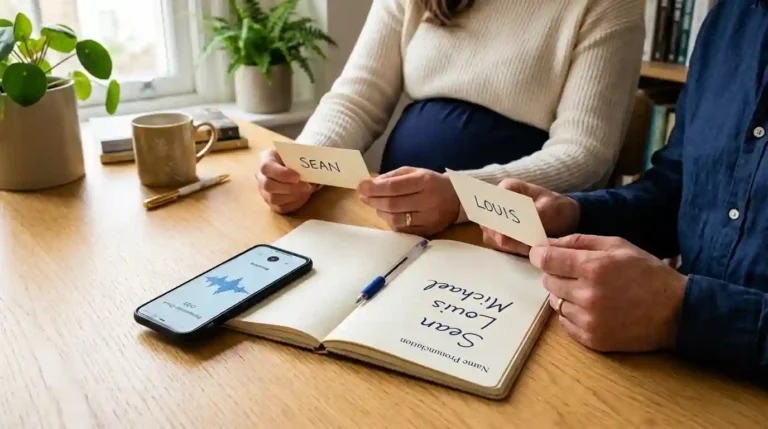
Our name pronunciation guide can help you record and share a consistent pronunciation. A brief audio recording is often more useful than an improvised phonetic spelling alone.
Consider the Name Throughout Childhood and Adulthood
Imagine your son introducing himself at different ages. Consider both the complete name and the shorter form he may use every day.
The goal is comfort, not predicting a career or personality. A name does not need to sound impressive in a particular profession to support a confident personal identity.
How Middle-Name Traditions Are Changing
Names change as families migrate, languages meet, and individuals make their own choices. Cultural continuity and adaptation can exist together.
Cultural Blending and Naming in Diaspora Families
Diaspora families may preserve a heritage name while adopting another name for use in their new country. Others maintain the original structure unchanged.
Both choices can reflect thoughtful family decisions. Our overview of what cultures have middle names helps readers recognize the differences without treating one arrangement as the default for everyone.
Unique Names and Greater Freedom of Choice
Some parents prefer uncommon or newly created names. Others return to ancestral names that feel distinctive in their current community.
A unique spelling does not automatically create a unique meaning. Check how the name will be read, pronounced, and recorded, particularly when adapting a word from a language the parents do not speak.
Multiple Middle Names and Compound Names
Multiple middle names can preserve several connections, while a compound name may function as one combined unit. These arrangements should be described accurately.
If you are asking can you have two middle names, consider what each contributes and how the complete name works. Registration and system constraints can vary, so verify the relevant requirements.
Adding or Changing a Middle Name Later in Life
An adult may add or change a name to reflect family connections, identity, or personal preference. Using a preferred name socially and changing official records are different processes.
The required procedure depends on the jurisdiction and document. Check the relevant authority’s instructions rather than assuming that an informal change automatically updates legal records.
Digital Records and the Future of Personal Names
Digital identity systems need to accommodate names with multiple components, varied scripts, and different orders. A rigid three-field model cannot represent every person accurately.
Better systems preserve the original name and allow appropriate display preferences. Families can support accuracy by keeping consistent records and correcting errors before they spread across institutions.
Frequently Asked Questions
Can Someone Have More Than One Middle Name?
Yes; many families use multiple middle given names, subject to the relevant registration rules.
Is a Middle Name Required?
A middle name is not universally required; requirements depend on the jurisdiction and naming system.
Can Someone Have No Middle Name?
Yes; many people have no middle name by family choice or cultural tradition.
Which Cultures Commonly Use English-Style Middle Names?
They are familiar in the United States, United Kingdom, Ireland, Canada, Australia, and New Zealand.
Are Russian Patronymics the Same as English Middle Names?
No; patronymics express a parental relationship, while English middle given names are generally chosen independently.
Is a Filipino Middle Name Usually Another Given Name?
In a common Filipino naming pattern, it is the maternal surname rather than an additional given name.
Do Chinese and Korean Two-Syllable Names Contain Middle Names?
Not necessarily; the syllables generally belong within a single given name.
Can a Boy Use His Middle Name as His Everyday Name?
Yes, if it is an independently usable given name and he prefers it.
Does Every Icelandic Person Have Only Two Names?
No; Icelandic names can include additional given names and, in some cases, a registered middle name.
Final Thoughts
Understanding what cultures have middle names means looking beyond where a word appears. An additional given name, maternal surname, patronymic, and generational character can carry different meanings even when each seems to sit in the middle. For parents choosing a boy’s name, the most useful approach is to understand the family tradition, confirm each component’s role, and test the complete name in everyday use. Preserve the connections you value while allowing room for personal preference. Your son’s name can honor his background without following every historical custom. Explore our boy-name ideas and naming guides, discuss meaningful options with relatives, and build a shortlist you can explain with confidence. A thoughtful name begins with understanding and becomes personal through the child who carries it.