
What Is a Middle Name? Meaning, History, and How It’s Used
Summary
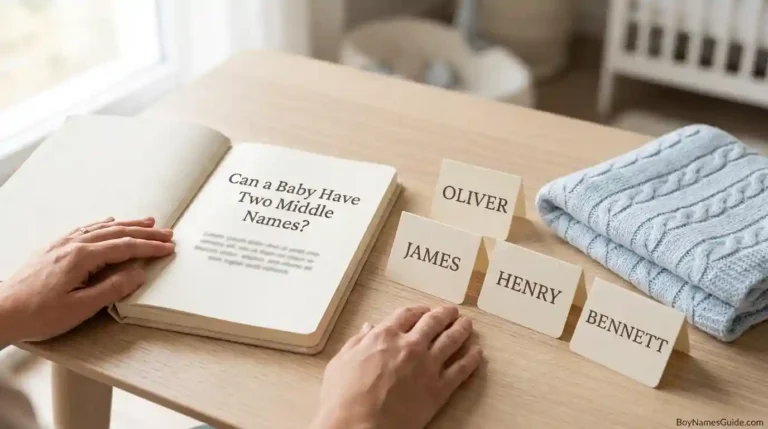
What is a middle name? A middle name is an additional personal name that usually appears between a person’s first name and surname, as in Ethan James Carter, where James is the middle name. It can honor a family member, preserve a maiden name, recognize a religious figure, distinguish people with similar names, or simply make a full name sound more complete. Not everyone has a middle name, and some people have two or more. Middle names are especially familiar in the United States, but naming customs vary widely around the world, so a name appearing in the “middle” position is not always technically a middle name. It could instead be part of a compound given name, patronymic, second surname, or another cultural naming element. If you have ever wondered what are middle names for, whether you have to have one, or how parents choose them, this guide explains their meaning, history, modern use, legal treatment, cultural differences, genealogy value, and practical examples.
Table of Contents
- What Is a Middle Name?
- What Is the Purpose of a Middle Name?
- Where Did Middle Names Originate?
- How Are Middle Names Used Today?
- Is a Middle Name Required in the United States?
- How Do Parents Choose a Middle Name?
- Do All Cultures Use Middle Names?
- How Can Middle Names Help With Genealogy?
- How Do You Add or Change a Middle Name?
- How Is Middle-Name Popularity Studied?
- Frequently Asked Questions About Middle Names
- Final Thoughts
What Is a Middle Name?
A middle name is a personal name placed between a person’s primary first or given name and family name in naming systems that use that structure.
For example:
Lucas Benjamin Wilson
can be divided into:
- First name: Lucas
- Middle name: Benjamin
- Surname: Wilson
So if someone asks what is middle name or what’s a middle name, Benjamin is the middle name in this example.
A middle name normally belongs to the person’s own set of given names. It is different from a title such as Dr., a name prefix such as Mr., or a name suffix such as Jr., III, or IV.
The basic concept sounds simple, but real names can be more complicated because naming practices differ among families, countries, languages, and religions.
That is why understanding what is a name is useful before assuming that every word between a first and last name performs the same function.
Where a Middle Name Appears in a Full Name
In the familiar American format, a full name often follows this order:
First Name + Middle Name + Surname
For example:
Henry Alexander Brooks
Henry is the first name or primary given name.
Alexander is the middle name.
Brooks is the surname or family name.
A middle name can also be represented by an initial:
Henry A. Brooks
In this case, “A.” is the middle initial, presumably representing Alexander if that is the person’s registered name.
However, you should not guess a full middle name from an initial unless you have evidence confirming it.
Someone could formally be recorded with a single-letter middle name, or records may simply provide an initial without revealing what it represents.
How a Middle Name Differs From a First Name and Surname
A first name primarily identifies the individual.
A surname primarily connects the individual with a family or inherited naming line.
A middle name typically functions as an additional personal name.
Consider:
Oliver Thomas Bennett
Oliver identifies the individual.
Thomas gives him another personal name.
Bennett is the family name.
The middle name can carry family meaning without being the surname used by the household.
For example, Thomas may be the boy’s grandfather’s first name.
Alternatively:
Oliver Harrison Bennett
could use Harrison because it was his mother’s maiden name.
This flexibility makes middle names valuable to parents who want to preserve both personal preference and family heritage.
If you want a deeper explanation of why these additional names exist, our guide on why do we have middle names explores the purpose behind the tradition.
How to Tell a Middle Name From a Compound First Name or Family Name
Position alone does not prove that something is a middle name.
Consider:
John Paul Carter
Paul could be a middle name.
But if the person’s given name is intentionally John Paul, the two words may form a compound given name.
Likewise:
José Luis Hernández García
might look like a first name, middle name, and two surnames to an American reader. In Mexican naming conventions, however, José Luis may be the person’s given names while Hernández and García are family surnames.
Our guide to do Mexicans have middle names explains this difference in more detail.
The same issue occurs in other cultures.
A word appearing between someone’s first and last name could be:
- a middle name
- second given name
- compound first name
- patronymic
- maternal surname
- paternal surname
- religious name
- lineage marker
- surname particle
- another culturally specific name element
For example, the question is bin a middle name cannot be answered simply by looking at where “bin” appears. In Arabic naming traditions, it can indicate lineage rather than functioning as a conventional middle name.
Examples of Names With One, Two, or No Middle Names
One Middle Name
Liam James Parker
First name: Liam
Middle name: James
Surname: Parker
Two Middle Names
Alexander James Thomas Reed
First name: Alexander
Middle names: James Thomas
Surname: Reed
People wondering can you have two middle names should know that multiple middle names are entirely possible.
No Middle Name
Ethan Cooper
First name: Ethan
Middle name: none
Surname: Cooper
There is nothing incomplete about this name simply because it has no middle element.
Middle Initial
William H. Foster
First name: William
Middle initial: H.
Surname: Foster
Family Surname Used as a Middle Name
Samuel Harrison Cole
First name: Samuel
Middle name: Harrison
Surname: Cole
Harrison might preserve a surname from another branch of the child’s family.

What Is the Purpose of a Middle Name?
If you are wondering what are middle names for, there is no single answer.
Middle names can preserve history, honor loved ones, add individuality, or make names sound better together.
A middle name effectively gives parents another naming opportunity.
Instead of forcing one first name to carry every family expectation, parents can divide those roles between the first and middle names.
Honoring Family Members, Loved Ones, and Religious Figures
Family honor is one of the strongest reasons people choose middle names.
A boy may receive the name of his:
- father
- grandfather
- great-grandfather
- uncle
- godparent
- family friend
- admired ancestor
Suppose parents choose:
Noah Robert Wilson
because Robert was the baby’s grandfather.
The boy can go by Noah in everyday life while still carrying Robert as a visible link to his family member and ancestry.
Religious traditions can work similarly.
A family may choose a saint’s name, religious name, or baptismal name as the child’s middle name.
The middle position therefore gives parents a place to preserve beliefs and family relationships without necessarily making the honor name the child’s everyday first name.
Distinguishing People With Similar Names
Middle names can also help distinguish people who share a first and last name.
Imagine three people named:
Michael Anderson
Adding middle names creates:
Michael James Anderson
Michael David Anderson
Michael Thomas Anderson
Middle initials provide an even shorter distinction:
Michael J. Anderson
Michael D. Anderson
Michael T. Anderson
This became increasingly practical as populations expanded and more institutions needed to distinguish people in historical records, schools, military files, businesses, and government systems.
A middle name is not a guaranteed unique identifier, but it adds another useful piece of personal information.
Adding Meaning, Personal Choice, or Flow to a Full Name
Parents often choose a middle name because of how it sounds.
For example:
Elias James Bennett
may appeal because the rhythm feels balanced.
Other parents choose a middle name because of its meaning.
Someone searching what is in a name meaning may discover that names can carry symbolic associations with strength, courage, faith, wisdom, nature, or family history.
The middle position also gives parents freedom to be more adventurous.
A conservative first name could be paired with a distinctive middle:
William Atlas Carter
Or a modern first name could be balanced by a traditional family name:
Maverick James Collins
If you’re naming a baby boy, browsing Boy Names can help you compare different combinations before making the final choice.
Where Did Middle Names Originate?
The history of middle names does not follow one simple path.
Modern middle names developed from centuries of changing cultural naming customs, religious influences, European traditions, family practices, and administrative needs.
The Roman Tria Nomina: Praenomen, Nomen, and Cognomen
Ancient Roman naming is often mentioned when discussing the history of multi-part names.
Prominent Roman men could use the tria nomina, consisting broadly of:
- praenomen
- nomen
- cognomen
The praenomen functioned somewhat like an individual personal name.
The nomen indicated the larger clan or gens.
The cognomen could identify a branch of the family and later become hereditary or carry other distinctions.
However, the Roman system should not be described as identical to the modern first-middle-last structure.
A Roman cognomen was not simply the ancient equivalent of today’s American middle name.
The value of the Roman example is that it shows how societies have long used multiple name elements to distinguish identity, lineage, and family membership.
The Return of Middle Names in Medieval Italy
After the Roman period, naming practices changed across Europe.
For long stretches of medieval European history, many people were primarily known by a single given name plus some identifying element, such as a location, occupation, parentage, or eventually an inherited surname.
Multiple personal names became increasingly visible again in parts of medieval Italy.
Among wealthier families and European nobility, additional names could help represent family alliances, saints, patrons, and ancestry.
These developments did not immediately create today’s American middle-name system, but they contributed to the broader European practice of giving individuals more than one personal name.
Saints’ Names, European Nobility, and the Spread of the Tradition
Christianity also influenced the expansion of multiple given names.
Families could honor:
- saints
- godparents
- religious figures
- relatives
A child might receive one personal name for everyday identity and another because of religious or family tradition.
Among noble families, extra names could also acknowledge several influential relatives or preserve politically and socially important family connections.
As European naming practices evolved, immigrants carried different traditions to North America.
This is important because “American naming” was never based on a single cultural source.
Different immigrant groups introduced different habits.
How Middle Names Became Common in the United States
Many early Anglo-Americans did not have middle names.
Famous examples include:
George Washington
Thomas Jefferson
Benjamin Franklin
During much of the colonial period, a first name plus surname was sufficient for many families.
Middle names began appearing more frequently among wealthy families during the late 18th century and expanded significantly during the 19th century.
Several influences likely helped:
- family-name preservation
- honoring relatives
- European naming traditions
- immigration
- population growth
- greater recordkeeping
- desire for individual distinction
German immigrants also brought naming customs involving multiple given names, adding to the variety of American practices.
By the 1800s, middle names were increasingly common, and by the later part of the century they were becoming a familiar part of American identity.
For a deeper look at middle names in the US, you can explore how the custom moved from relative rarity to a mainstream naming practice.
The U.S. National Park Service provides a useful historical overview in its article on why early Americans often had no middle names.
When Government Forms Began Asking for Middle Names
Government records provide an interesting clue about the normalization of middle names.
By the early 20th century, the practice was common enough that middle names and initials increasingly appeared in official recordkeeping.
A frequently cited example is the World War I enlistment form, which provided space for a middle name.
This illustrates an important change.
A feature of personal naming that had once been optional and comparatively unusual had become common enough for administrative systems to expect it.
That expectation still influences modern forms.
Many forms today include:
First Name
Middle Name or Initial
Last Name
But the existence of the field does not mean every person must have a middle name.

How Are Middle Names Used Today?
Modern middle names can be highly visible or almost invisible.
Some people spell out their full middle name everywhere.
Others use only an initial.
Some rarely use their middle name at all.
Middle Names on Legal Documents and in Everyday Life
A middle name may appear on:
- birth certificate
- passport
- driver’s license
- state ID
- school records
- employment documents
- bank records
- insurance records
- court documents
- military records
However, different institutions can treat middle names differently.
Someone named:
Nathaniel James Brooks
might appear as:
Nathaniel James Brooks
on one record,
Nathaniel J. Brooks
on another,
and simply:
Nathaniel Brooks
elsewhere.
That does not automatically mean the records refer to different people.
Official systems often vary in how much of a person’s full name they display.
Using a Middle Initial Instead of a Full Middle Name
Using a middle initial is common in American public and professional life.
Examples might look like:
Daniel R. Carter
Henry J. Foster
Samuel T. Brooks
Initials offer several advantages.
They make a name shorter, distinguish people with similar names, and can create a more formal professional presentation.
Writers, academics, lawyers, doctors, and public figures may use a middle initial consistently even though friends and family rarely mention the middle name.
What to Enter on a Form if You Have No Middle Name, an Initial, or Multiple Middle Names
Always follow the instructions on the specific form.
If you have no middle name, do not invent one merely because a box is present.
A form may permit you to:
- leave the field blank
- select “no middle name”
- enter a particular abbreviation if specifically instructed
Do not automatically type “N/A” or “NMN” unless the form tells you to.
If you have multiple middle names, enter them according to the form’s instructions and the supporting identity document being used.
For official government applications, consistency matters more than trying to squeeze every naming tradition into an assumed first-middle-last format.
Going by Your Middle Name: Reasons and Practical Drawbacks
Some people regularly use their middle name instead of their first name.
Someone legally named:
John Andrew Parker
might be known to everyone as:
Andrew Parker.
Reasons include:
- family preference
- several relatives sharing the first name
- disliking the first name
- liking the middle name more
- professional branding
- cultural tradition
There is nothing unusual about this socially.
However, it can create practical confusion when official documents say John while school, work, social media, and acquaintances use Andrew.
People who regularly go by a middle name should be prepared to distinguish between their preferred name and the name required for legal or identity verification.
Is a Middle Name Required in the United States?
No.
You do not have to have a middle name in the United States.
A person can be named:
Jack Wilson
without anything between the first and last name.
The absence of a middle name does not make a name incomplete.
Interestingly, for Social Security administration purposes, the Social Security Administration focuses on first and last names when defining the legal name used for an SSN. Middle names and suffixes are handled separately in that particular administrative system.
This does not mean middle names are meaningless elsewhere. It simply demonstrates that different institutions can define and store names differently.
Parents can therefore choose:
- no middle name
- one middle name
- multiple middle names
depending on their preferences and applicable naming rules.
How Do Parents Choose a Middle Name?
Choosing a first name often feels like the biggest decision, but the middle name can dramatically change the character of the full name.
Parents may consider:
- family significance
- meaning
- sound
- initials
- cultural heritage
- religion
- uniqueness
- future flexibility
If you’re still selecting the first name, our guide on how to choose a baby name can help you narrow the options before pairing it with a middle name.
Family Names, Maiden Names, and Naming Traditions
Family names are among the most popular sources of middle names.
A boy might receive his grandfather’s first name:
Leo Thomas Bennett
Or his mother’s maiden name:
Henry Sullivan Parker
This can preserve a branch of the family tree that would otherwise be less visible in the child’s everyday surname.
A family surname can work especially well as a middle name:
James Harrison Cole
Oliver Bennett Reed
Samuel Brooks Carter
For many parents, this provides a balance between choosing a first name they love and maintaining lineage.
Cultural, Ethnic, and Religious Names
American families may use the middle position to preserve a name connected to their cultural background.
A child might have an English-language everyday first name and a heritage middle name.
Religious families may choose:
- saint’s name
- biblical name
- baptismal name
- godparent’s name
This gives the child a connection to faith or culture without requiring the religious or heritage name to be the everyday first name.
The choice also illustrates why what cultures have middle names is a more complex question than it first appears.
Place Names, Pop Culture, and Names Inspired by Personal Interests
Modern parents increasingly draw middle names from beyond the traditional family tree.
Possible inspirations include:
- cities
- states
- countries
- nature
- literature
- musicians
- athletes
- fictional characters
- meaningful places
- personal interests
A couple who met in Austin might consider:
Benjamin Austin Reed
Parents who love nature might choose:
Theodore River Collins
A family with a meaningful connection to a location might preserve it in the middle position without making it the child’s everyday first name.
Choosing a Name for Its Meaning, Sound, or Flexibility
A middle name should usually flow naturally with the first and last names.
Say the entire combination aloud:
First + Middle + Last
Look for awkward repetition, difficult transitions, or initials you may not want.
For example:
Ethan Alexander Cole
has a different rhythm from:
Ethan Lee Cole
Neither is automatically better.
One may simply suit your family’s style more closely.
Our detailed guide on how to pick a middle name can help you compare sound, length, meaning, family significance, and initials.

Do All Cultures Use Middle Names?
No.
One of the biggest mistakes in international naming is assuming every culture uses:
First Name + Middle Name + Last Name
Many do not.
Some cultures use multiple given names.
Others use two surnames.
Some identify a person’s father or ancestry.
Others use surname particles or different ordering conventions.
How Naming Customs Differ Around the World
Mexican naming conventions commonly use two family surnames, which can confuse people accustomed to U.S. forms. Our guide on do Mexicans have middle names explains why a second apellido should not automatically be classified as a middle name.
Indian naming systems vary enormously by region, religion, language, and family tradition. Read do Indians have middle names for examples.
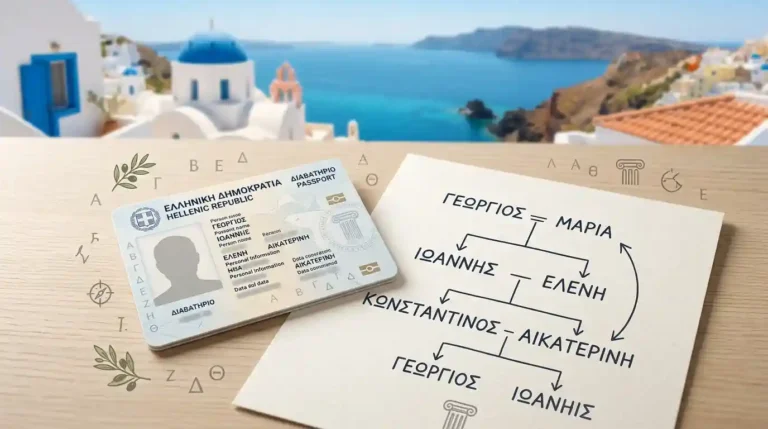
Greek records may include a parental identifier that can be misunderstood as a Western-style middle name; our guide to do Greeks have middle names explains that distinction.
French naming practices can involve several personal names, as discussed in middle names in French.
Even small words inside a name require context. Something that looks like a de middle name may actually be part of a surname or another naming construction.
Middle Names and Other Ways of Showing Family Lineage
A conventional middle name is only one method of expressing family lineage.
Cultures may use:
- patronymics
- maternal surnames
- paternal surnames
- clan names
- ancestor names
- multiple family names
- religious names
- generation names
That is why international forms can be challenging.
A system designed with three boxes—first, middle, last—may not accurately represent every person’s original naming structure.
A name should therefore be interpreted according to its culture, not merely according to the position of its words.
Knowing the correct name pronunciation is another part of respecting names from unfamiliar linguistic traditions.
How Can Middle Names Help With Genealogy?
Middle names can be extremely useful in genealogical research.
Because families often reuse names, a middle name can help distinguish between people and reveal relationships that are not immediately obvious.
Using Middle Names to Identify Ancestors and Family Relationships
Imagine researching three men named:
John Miller
living in the same county.
One record says:
John Henry Miller
Another says:
John Robert Miller
A third says:
John Samuel Miller
The middle names provide valuable clues.
They can help you connect each man with:
- correct spouse
- parents
- children
- military service
- property records
- cemetery record
Middle names can also preserve an ancestor’s surname.
Suppose you discover:
Thomas Whitmore Davis
and later learn that his maternal grandmother’s maiden surname was Whitmore.
That middle name may connect two family branches.
Tracing a Middle Name Through Family Records
When researching a middle name, compare several types of documents:
- birth records
- baptismal records
- census records
- marriage licenses
- military records
- immigration records
- wills
- probate records
- newspapers
- cemetery records
- death certificates
Be cautious.
A missing middle name in one record does not prove the person had none.
Likewise, a middle name appearing in a later record does not automatically prove it was the person’s birth name.
Someone may have:
- adopted the name later
- used a baptismal name
- begun using a family name informally
- been recorded incorrectly
- had the middle name omitted from earlier documents
Genealogy works best when multiple pieces of evidence support the same conclusion.

How Do You Add or Change a Middle Name?
A person can often add, remove, or change a middle name, but the procedure depends on location and circumstances.
Possible reasons for a name change include:
- honoring a relative
- adopting a religious name
- changing an unwanted birth name
- adding a family surname
- marriage
- divorce
- adoption
- personal preference
What to Check Before Starting a Name Change
In the United States, name-change procedures vary by state.
Depending on where you live, an independent name change may involve:
- filing a court petition
- providing identification
- paying a filing fee
- completing notice requirements
- attending a hearing
- receiving a court order
Some name changes may occur through other recognized events, such as marriage, divorce, or adoption.
Before beginning, check your state and local court requirements.
Also think about the practical impact.
A new middle name can affect many different records.
Which Records May Need Updating After a Name Change
After a legal name change, you may need to update:
- Social Security record
- driver’s license
- state ID
- passport
- employer records
- bank accounts
- tax records
- voter registration
- insurance
- school records
- professional licenses
Keep copies of the legal document supporting the change.
Consistency across important records can reduce future identity-verification problems.
How Is Middle-Name Popularity Studied?
People frequently ask which middle names are most popular.
Unfortunately, reliable nationwide middle-name rankings are harder to produce than first-name rankings.
What Baby-Name Data Can Reveal About Naming Trends
Baby-name statistics can tell us a great deal about given name popularity.
For example, researchers can follow changes in popular boys’ first names across decades and observe shifts between biblical, traditional, modern, nature-inspired, and international names.
These trends can also influence middle names.
When a once-popular first name becomes associated with a previous generation, parents may begin using it as an honor middle name instead.
For example, names connected to grandparents may move naturally into the middle position even when they are less fashionable as first names.
This creates a cycle in which middle names help preserve names between generations.
Limits of the Available Middle-Name Data
Middle-name statistics are much less complete than first-name statistics.
Not every database:
- collects middle names
- publishes them
- distinguishes compound first names from middle names
- records multiple middle names consistently
- separates initials from full names
That makes claims such as “this is definitely the most common middle name in America” difficult to prove without a clearly defined dataset.
Popularity lists should therefore be treated as useful inspiration rather than perfect national measurements.
For a baby-name website, the best approach is to combine available naming data with actual naming patterns, family traditions, phonetic compatibility, and meaning rather than pretending incomplete data are more precise than they are.
Frequently Asked Questions About Middle Names
What is a middle name?
A middle name is an additional personal name usually placed between a person’s first name and surname.
What are middle names?
Middle names are additional given names that can honor family, express heritage, distinguish individuals, or add meaning to a full name.
What are middle names for?
Middle names can honor relatives, preserve family names, express religion or culture, distinguish people, and improve the flow of a full name.
What is a middle name example?
In Noah James Parker, James is the middle name.
What is middle name with example?
In Ethan Alexander Reed, Ethan is the first name, Alexander is the middle name, and Reed is the surname.
Do you have to have a middle name?
No, many people legally have no middle name.
What if someone has no middle name?
They simply use their given name and surname, or whatever name structure their culture and legal records provide.
Can someone have more than one middle name?
Yes, a person can have two or more middle names depending on local rules and family preference.
Can you use your middle name instead of your first name?
Yes, many people socially or professionally go by their middle name.
What is my middle name?
Your middle name is the additional personal name recorded between your first name and surname, if you have one.
What does a middle name mean?
Its meaning depends on why it was chosen; it may honor family, preserve heritage, express faith, or simply be a name the parents liked.
Is a second name always a middle name?
No, a second name may be part of a compound first name, another given name, surname, patronymic, or culturally specific naming element.
Is a middle initial a middle name?
A middle initial usually represents a middle name, but the underlying record should be checked before assuming the full name.
Can a surname be used as a middle name?
Yes, family surnames and maiden names are frequently used as middle names.
Can a mother’s maiden name become a child’s middle name?
Yes, this is a well-established way to preserve maternal family heritage.
Can a religious name be a middle name?
Yes, saints’ names, biblical names, baptismal names, and other religious names are often used as middle names.
Can a middle name appear on a passport?
Yes, depending on how the person’s name is recorded and the document’s naming fields.
Is a middle name required on official forms?
Not necessarily; follow the instructions for the specific form and do not invent a middle name if you do not have one.
Can you legally change a middle name?
Yes, but procedures depend on the jurisdiction and circumstances of the change.
Are middle names used in every country?
No, naming structures vary significantly around the world.
Why do some people have several middle names?
Family, cultural, religious, and personal naming traditions may encourage multiple additional given names.
What middle name goes with a boy’s first name?
The best option usually complements the first and surname in sound, meaning, length, initials, and family significance.
Final Thoughts
So, what is a middle name? It is usually an additional personal name placed between a person’s first name and surname, but its real value goes far beyond its position. A middle name can preserve family heritage, honor an ancestor or godparent, carry a religious connection, distinguish people with similar names, or simply give parents more freedom when building a meaningful full name.
Not everyone needs one, and naming customs around the world often use very different structures. That is why a word in the middle of a full name should never automatically be assumed to be a middle name.
If you’re choosing a name for your baby boy or researching how names work across cultures, explore our Naming Guides for more practical naming ideas, traditions, meanings, and cultural explanations.