Boy Nicknames: Cute, Cool, Funny & Unique Ideas
Summary: The best boy nicknames feel personal, sound natural, and make the person wearing them smile. Whether you need a cute name for your baby, a friendly nickname for your brother, a cool option for a teenager, or something playful for your best friend, this guide helps you find a choice that fits. Explore familiar favorites such as Ben, Charlie, and Teddy alongside funny, unusual, sporty, nature-inspired, and culturally meaningful ideas. You will also find short forms of longer names, initial-based options, matching names for siblings, and practical ways to create something original. Each section explains where a nickname works best, so you can move beyond a random list and choose with confidence. Want to know what a nickname means, whether it can grow into adulthood, or how to avoid an embarrassing choice? Those answers are here, too. Start with the quick comparison, browse the categories that match your needs, and build a shortlist of names you would genuinely enjoy saying every day.
Table of Contents
- Popular Boy Nicknames at a Glance
- Boy Nicknames by First Letter: A–Z Index
- Classic and Vintage Boy Nicknames
- Cute and Sweet Boy Nicknames
- Cool and Stylish Boy Nicknames
- Funny and Playful Boy Nicknames
- Unique and Unusual Boy Nicknames
- Short Boy Nicknames
- Strong and Tough Boy Nicknames
- Boy Nicknames by Age
- Boy Nicknames Based on Personality
- Boy Nicknames Based on Appearance
- Boy Nicknames by Relationship
- Boy Nicknames Inspired by Favorite Things
- Boy Nicknames for Gaming and Social Media
- Boy Nicknames from Different Languages and Cultures
- Boy Nicknames Derived from Given Names
- Boy Nicknames from Initials
- Boy Nicknames Based on Surnames
- Boy Nicknames with Meanings and Origins
- What Is a Nickname and Why Does It Matter?
- How to Create a Unique Boy Nickname
- How to Choose the Right Boy Nickname
- Nickname Mistakes to Avoid
- How to Use Nicknames Respectfully
- Frequently Asked Questions
- Final Thoughts
Popular Boy Nicknames at a Glance
A good nickname can come from a given name, a personality trait, a favorite activity, or a shared memory. The quickest way to narrow your options is to decide what job the nickname should do. A family pet name may express affection, while a name used at school should usually feel comfortable around classmates. An online handle has another purpose: it helps someone create an identity without necessarily revealing their real name.
Use the following comparison as a starting point. These are suggested styles rather than ranked lists. The same nickname can fit more than one category, but the relationship and the boy’s preference determine whether it actually works.
| Nickname style | Ideas to consider | Best starting point |
| Familiar and friendly | Ben, Charlie, Sam, Joey | Everyday conversation |
| Cute and affectionate | Teddy, Peanut, Button, Cuddlebug | Family use and young children |
| Cool and confident | Ace, Dash, Jett, Knox | Older children and teens |
| Funny and playful | Waffles, Noodle, Goose, Pickles | Friends who share the joke |
| Classic and vintage | Alfie, Eddie, Lou, Sonny | Families who enjoy traditional names |
| Nature-inspired | Ash, River, Reed, Bear | Outdoor interests and personal symbolism |
| Name-based | Alex, Benji, Gabe, Theo | A clear connection to the full name |
| Initial-based | AJ, CJ, DJ, TJ | First and middle names |
If you are choosing the formal name and nickname together, explore Boy Names before making the final decision. A longer name can offer several short forms, giving a child room to choose a different version as he grows.
Most Popular Boy Nicknames in the USA
There is an important difference between a popular legal first name and a popular informal nickname. Official birth-name data records names used on applications; it does not tell us how often parents call a child Buddy, Peanut, or Champ at home. That means a precise national ranking of every everyday nickname would be misleading.
For a useful American shortlist, consider Liam, Theo, Ollie, Will, Charlie, Jack, Ben, Sam, Alex, and Max. Some are established short forms, some function comfortably as independent given names, and several can do both. Liam is connected historically with William; Theo commonly shortens Theodore; Ollie shortens Oliver; and Will shortens William.
The Social Security Administration’s baby-name database is the authoritative resource for checking U.S. birth-name popularity. Its 2025 top ten includes Liam, Oliver, Theodore, and William, making their familiar short forms useful starting points. Those rankings describe registered names, not a separate survey of nickname use.
Choose a familiar option if easy pronunciation matters more than originality. Ben, Sam, and Will require little explanation in many American settings. Choose a more distinctive short form if there are already several children with the same name in the family or classroom. Either way, familiarity is only a starting point; personal comfort matters more than popularity.
Popular Indian Boy Nicknames
Indian household nicknames often serve a different purpose from formal given names. A family might use an affectionate home name that has little connection to the name written on school records. Language, region, religion, and family tradition can all shape the choice, so there is no single style shared by every Indian household.
Ideas to explore include Chintu, Bunty, Babu, Sonu, Monu, Golu, Chiku, and Pintu. These are recognizable household-style choices in some communities, rather than a verified national popularity ranking. Their associations and appropriate use vary, especially when a name crosses regional or linguistic boundaries.
Some families prefer a shorter version of the official name: Adi from Aditya, Aaru from Aarav, Kabi from Kabir, or Viru from a name beginning with Vir. These adaptations can make the connection between home and school names easier to follow.
For a child growing up in the United States, test the nickname in both family languages. Say it with the surname, explain its pronunciation to someone unfamiliar with it, and check that the child likes the sound. Keeping a meaningful household name does not require replacing it with an English nickname for other people’s convenience.
Boy Nicknames by First Letter: A–Z Index
An alphabetical index helps when you want a nickname that matches a first initial, creates pleasing alliteration, or is easy to find in a long list. It also gives you a quick overview before you choose a category. A starting letter does not tell you the nickname’s meaning or suitability, so use this index to build a shortlist rather than make the whole decision.
| Letter | Boy nickname ideas |
| A | Ace, AJ, Al, Alex, Alfie, Ash |
| B | Bear, Ben, Benji, Billy, Bo, Buddy |
| C | Cal, Charlie, Chip, CJ, Cole, Cub |
| D | Dan, Dash, Dax, DJ, Drew, Duke |
| E | Eddie, Ed, Eli, Enzo, Ezzy |
| F | Finn, Flash, Fox, Frankie, Freddie |
| G | Gabe, Geo, Goose, Gus |
| H | Hank, Harry, Hawk, Hero, Hugo |
| I | Ian, Ike, Indy, Izzy |
| J | Jack, Jamie, Jax, Jett, Joey, Junior |
| K | Kai, Kit, KJ, Knox, Koda |
| L | Leo, Lex, Lou, Louie, Lucky |
| M | Mack, Max, Mikey, Milo, Moose |
| N | Nate, Ned, Nico, Nicky, Noodle |
| O | Ollie, Oz, Ozzie |
| P | Patch, Peanut, Pete, Pip, PJ |
| Q | Q, Quin, Quinn |
| R | Ray, Red, Reed, Remy, Rex, Rocky |
| S | Sam, Scout, Sid, Skip, Sonny, Sunny |
| T | Ted, Teddy, Theo, Tiger, TJ, Toby |
| U | Ugo, Uri |
| V | Van, Vic, Vin, Vinny |
| W | Wes, Will, Woody, Wren |
| X | X, Xan, Xander |
| Y | Yash, Yogi |
| Z | Zac, Zed, Zeke, Ziggy |
Letters such as Q, U, and X naturally offer fewer familiar English-language options. Some entries are independent given names that can be used informally, rather than traditional shortened names. You do not need to invent an awkward spelling simply to fill a preferred letter.
Try pairing a shortlisted option with the surname: Cal Carter, Ben Brooks, or Theo Turner. Alliteration can sound memorable, but too many repeated sounds may become clumsy. Say the combination at an ordinary speaking pace before deciding whether it flows.
Classic and Vintage Boy Nicknames
Classic boy nicknames have an advantage: they can feel affectionate without sounding tied to a passing trend. Many began as short forms of longer given names and became familiar choices in their own right. Vintage options add a slightly old-fashioned character that can feel especially warm when connected to a relative.
Consider Alfie, Archie, Artie, Bertie, Billy, Bobby, Charlie, Eddie, Frankie, Freddie, Hank, Harry, Joey, Lou, Louie, Ned, Reggie, Sonny, Teddy, and Wally. The appeal is not that every name belongs to one historical period; it is that these choices have recognizable, established use and an approachable sound.
| Nickname | Common full-name connection | Style |
| Alfie | Alfred | Cheerful and traditional |
| Archie | Archibald | Friendly with vintage character |
| Artie | Arthur | Warm and informal |
| Eddie | Edward or Edmund | Familiar across ages |
| Freddie | Frederick | Playful but adaptable |
| Lou | Louis or Lewis | Short and understated |
| Reggie | Reginald | Lively and retro |
| Wally | Walter | Relaxed and affectionate |
Some short forms have more than one source. Hank is often associated with Henry, while Harry has historical connections with Henry and is also used independently. A family nickname does not always follow a neat linguistic rule, so it is helpful to describe the connection without presenting it as the only possible explanation.
If Archie is already on your shortlist, the guide to nicknames for archie can help you compare gentle variations and more playful family options. Choose the version that fits the person rather than assuming a vintage nickname must stay unchanged throughout his life.
Cute and Sweet Boy Nicknames
Cute nicknames work best when affection is the point. They can turn an ordinary greeting into something that feels familiar and reassuring, especially within a family. The key is to separate a name you enjoy saying from one the boy enjoys hearing. A toddler may love Button, while an older child may prefer Benji or Teddy.
Soft sounds, repeated syllables, and affectionate imagery often give these names their character. Bubba, Buddy, Cuddlebug, Little Bear, Peanut, Pip, Pumpkin, Teddy, and Sunny offer different kinds of warmth. Some come from ordinary words, while others connect naturally with given names.
If you wonder, “What are cute nicknames?” think of names that feel gentle, affectionate, and comfortable in the relationship. Cuteness is a tone, not an official naming category. The most useful choice is one that comes easily in everyday conversation and does not make the person feel belittled.
Cute Nicknames for Baby Boys
For a baby, a nickname can reflect affection without describing appearance or imposing a personality. A name such as Little Bear can simply mean that he is loved and cuddly. It does not need to predict whether he will grow up strong, quiet, athletic, or outgoing.
Try Bean, Bub, Bubba, Button, Cub, Dumpling, Little Bear, Little Man, Peanut, Pip, Poppet, Pumpkin, Sprout, Teddy, or Tot. Each offers a slightly different feel. Bean and Sprout suggest small beginnings; Teddy sounds familiar and soft; Cub creates a gentle animal association.
Use baby boy nicknames in ordinary moments to see which ones feel natural. “Good morning, Teddy” may flow more easily than a longer phrase that sounded adorable on paper. A nickname is likely to become part of your daily routine, so practical ease matters.
Keep a separate shortlist if you are also choosing a legal first name. An affectionate home name can exist alongside a formal name without needing to become the child’s permanent public identity. That gives the family flexibility as he starts school and develops his own preferences.
Affectionate Pet Names for Boys
Affectionate pet names express closeness more directly than most name-based nicknames. Sweetheart, Honey, Lovebug, Sunshine, Sweet Pea, Cuddlebug, Treasure, and Darling are examples. Their suitability depends heavily on who is speaking and where the name is used.
A parent calling a small child Sweet Pea has a different relationship from a classmate using the same term. A romantic partner might enjoy Honey, while a male friend may prefer Buddy. There is no universal answer to “What nicknames do guys like to be called?” Individual preference matters more than a list of supposedly perfect words.
Think about privacy as well as affection. A name welcomed during a quiet conversation may feel uncomfortable at a family gathering or in a public comment. Asking “Do you like it when I call you Sunshine?” is more useful than assuming silence means approval.
For a beautiful nickname, prioritize the feeling it creates over how elaborate it sounds. A simple, familiar name can carry more meaning than an impressive phrase chosen only because it looks attractive in a list.
Cool and Stylish Boy Nicknames
Cool nicknames usually sound easy, confident, and memorable. They may have crisp consonants, a short rhythm, or a connection to something the person genuinely enjoys. Ace, Dash, Jett, Kai, Knox, Lex, Nico, and Zeke offer different versions of that style.
If you are asking, “What’s a cool nickname?” begin with the boy’s existing identity. An outdoor enthusiast may like Scout; a musician may prefer Jazz; someone who wants a simple name-based option might choose Lex. A nickname works better when it fits than when it tries too hard to sound impressive.
Style should also survive ordinary conversation. Say the name in a classroom introduction, over the phone, and during a casual greeting. A choice that only works as a dramatic screen name may not suit daily use.
Modern and Trendy Boy Nicknames
Modern options often include compact names, lively sounds, and short forms that work independently. Try Arlo, Dax, Enzo, Finn, Jax, Kai, Leo, Milo, Nico, Remy, Theo, and Zeke. These are style suggestions, not a claim that every option is rising in current birth records.
For name-based continuity, Theo keeps a clear link to Theodore, Nico can connect with Nicholas, and Zeke commonly shortens Ezekiel. Others, such as Arlo and Milo, may already be full given names and simply serve as informal everyday names in a particular household.
Blake already has a compact sound, so its nickname may come from initials, an affectionate ending, or a personal interest rather than a dramatic shortening. Explore nicknames for blake if you want ideas tailored to a name that is short from the start.
Treat trends as inspiration rather than a requirement. A boy who likes Sam should not need to become Jax because another spelling looks fashionable. Modern style can be simple, familiar, and easy to use.
Edgy and Aesthetic Boy Nicknames
Edgy options create a sharper impression, while aesthetic names often draw on colors, natural materials, weather, or imagery. Ash, Onyx, Slate, Storm, Frost, Raven, Echo, and Rune suit different moods. They are generally more useful as chosen nicknames or online handles than as assumptions about a child’s character.
| Nickname | Association | Possible use |
| Ash | Trees, color, and a clipped sound | Everyday nickname or handle |
| Onyx | A dark gemstone | Artistic or gaming identity |
| Slate | Stone and muted color | Understated online name |
| Storm | Weather and energy | Dramatic chosen nickname |
| Echo | Sound and repetition | Music or creative profile |
| Frost | Cold-weather imagery | Gaming or seasonal theme |
These associations are not all historical name meanings. Calling someone Storm does not mean that the name has an ancient translation of “powerful leader.” Describe the image it suggests and let the reader decide whether that image fits.
An aesthetic nickname should still be readable. Extra punctuation and unusual letter substitutions can make a simple choice harder to search, spell, or say aloud.
Funny and Playful Boy Nicknames
Funny nicknames work when both people understand and enjoy the joke. They often come from a harmless habit, an amusing shared moment, or an unexpected word. The goal is friendly humor, not a label that lets other people embarrass the boy repeatedly.
Ideas include Goose, Noodle, Pickles, Waffles, Banjo, Boomer, Doodle, Giggles, Pudding, Scooter, and Tater Tot. Some sound funny because they are surprising; others suggest movement or playfulness. None requires a negative comment about appearance, ability, or family background.
For a larger collection of lighthearted choices, browse funny nicknames for boys. Use the list to spark ideas, then check whether the person actually likes the result.
Quirky and Lighthearted Nicknames
Quirky nicknames are especially useful when you want something funny without making the person the target. Waffles, Pickles, Doodle, Goose, Noodle, Pogo, Bubbles, and Banjo create a playful tone through sound and imagery.
A nickname might come from the friend who always orders waffles, the child who loves drawing doodles, or the brother who dances around the kitchen. That gives the name a personal explanation. It also makes it easier to tell whether the joke is affectionate or forced.
Keep the story easy to share. If explaining the nickname requires retelling a humiliating accident, private mistake, or sensitive medical detail, choose another idea. A good nickname should not depend on the person surrendering privacy.
Test it gently: use it once, watch the response, and ask if needed. A genuine laugh and voluntary use are stronger signs of comfort than an awkward smile in front of a group. If the nickname does not land, let it go rather than trying to make it stick through repetition.
Meme-Inspired Boy Nicknames
Meme-inspired names can be fun for teenagers and friends who share the same online humor. Side Quest, Loading, Laggy, Plot Twist, Snack Boss, and Main Character are playful examples. They function more like humorous labels or handles than traditional diminutives.
Use them with a clear sense of context. Side Quest might fit a friend who turns every outing into an unexpected adventure; Loading might be a joke shared by two gamers. Neither should become a permanent comment on intelligence or reliability.
Online references can also age quickly. A phrase that feels funny this month may stop making sense when the group moves on to a new game, creator, or joke. Choose a flexible name if you want it to last, or accept that a temporary nickname can be enjoyable without being permanent.
Before using a meme name publicly, check its current associations. Some expressions carry meanings beyond the joke you know. Avoid references built around slurs, harassment, adult content, or an identifiable person’s humiliation.
Unique and Unusual Boy Nicknames
Unique nicknames do not need to be complicated. Often, the most distinctive option combines a familiar word with a personal connection that other people would not think to use. Orbit, Compass, Cedar, Finch, Quill, Rook, Harbor, and Pebble offer different directions for that approach.
Orbit could suit a space enthusiast, Quill a young writer, and Compass an adventurous friend. These are creative associations rather than guaranteed personality descriptions. Let the person’s interest lead the choice instead of assigning an identity he has not chosen.
For an unusual name-based option, look at a less obvious part of the full name. Alexander offers Xander and Lex; Edward offers Ned; Christopher offers Kit. A familiar name can produce a distinctive nickname without invented spelling.
You can also build a family-specific choice by combining a name with an interest. Theo + painting = Theo Sketch or Ben + hiking = Trail Ben gives a starting point, though the final version should feel natural enough to use. Some combinations will work better as handles than spoken nicknames.
Ask whether originality is really the priority. A unique nickname that constantly needs explaining may be less enjoyable than a common name with a meaningful story. Distinctiveness is useful when it helps the person feel recognized, not when it creates extra work every time someone introduces him.
Short Boy Nicknames
Short boy nicknames are practical because they are quick to say, easy to remember, and adaptable across settings. But short spelling and short pronunciation are not the same thing. AJ has two letters but is usually spoken as two letter names, while Max has three letters and one syllable.
If you wonder, “What does short name mean?” it usually refers to either a brief given name or a shortened form of a longer name. The context decides which meaning applies. Leo can be a complete name; Ben can be a full name or a short form of Benjamin.
Choose according to the result you want: compact spelling, a single spoken beat, a clear full-name connection, or an easy everyday name.
Two-Letter Boy Nicknames
Two-letter choices include Al, Bo, Ed, Jo, Mo, Oz, AJ, CJ, DJ, and TJ. Some are spoken as words, while others are initial-based. That distinction matters when you compare how short they feel in conversation.
Al and Ed connect neatly with names such as Albert, Alfred, Alexander, Edward, and Edmund. Bo may be an independent chosen nickname without a specific longer name. Mo can shorten several given names, depending on the person’s name and cultural background.
Initials should come from a connection the boy understands and likes. AJ may stand for a first and middle name, or a familiar family combination. Do not treat any two-letter pair as automatically masculine or appropriate simply because it is short.
Say the letters beside the surname. A compact written nickname can create an awkward spoken rhythm if the surname begins with a similar sound. Also check whether the initials resemble an unwanted abbreviation in the child’s school or community.
Three-Letter Boy Nicknames
Three-letter options offer a balance between brevity and familiarity. Ben, Cal, Dan, Gus, Jay, Kit, Leo, Lex, Lou, Max, Ned, Ray, Sam, Ted, and Zac are useful starting points.
Their full-name connections differ. Ben commonly shortens Benjamin; Dan shortens Daniel; Cal may connect with Calvin; Max can shorten Maxwell or Maximilian; and Zac commonly shortens Zachary. Kit is a traditional short form of Christopher, even though the spelling connection is less obvious.
Micah illustrates why a short given name may not need much shortening. A family might choose Mic, Mikey, or an initial-based option, but the person’s pronunciation and preference should guide the result. See nicknames for micah for ideas connected specifically to that name.
Three letters do not always create one syllable. Leo is usually two syllables in American English. Count the spoken rhythm as well as the written letters when deciding whether a name feels short enough.
Four-Letter Boy Nicknames
Four-letter choices include Alex, Andy, Dash, Drew, Finn, Gabe, Hank, Jack, Jett, Joey, Nico, Theo, Toby, and Zeke. Some feel especially conversational because they have familiar full-name connections; others work as independent names or interest-based nicknames.
Alex is versatile and recognizable, while Gabe preserves a clear connection with Gabriel. Drew can be taken from Andrew rather than only from the beginning of a given name. Theo commonly comes from Theodore, although other names beginning with Theo can share the same short form.
Four letters leave enough room for a distinct sound without making the name cumbersome. That can help when two boys share the same first initial. Alex and Andy are easy to tell apart, while two children both called A may need constant clarification.
Check the spoken form rather than assuming every four-letter name is equally simple. A boy may prefer the full name Levi to an improvised shorter version. If you want affectionate alternatives, explore nicknames for levi and compare them with simply keeping Levi as it is.
One-Syllable Boy Nicknames
For a single spoken beat, consider Ace, Ash, Bear, Ben, Cal, Cole, Dash, Drew, Finn, Fox, Gus, Jack, Jett, Kit, Knox, Lex, Max, Reed, Sam, Scout, or Will.
One-syllable names can feel brisk and confident, but the final sound changes their character. Max ends sharply; Lou feels open and softer; Bear has a gentler animal association. There is no need to choose the hardest consonant if the person prefers an easygoing style.
Test the nickname with a longer surname. A short first element can create useful balance, but a name ending in the same sound that begins the surname may run together. Say it slowly and at normal speed to catch that issue.
One syllable also makes a nickname easy to call across a playground or sports field. Still, clarity matters more than sheer brevity. If several children are already called Max, a slightly longer option may be more practical in that setting.
Strong and Tough Boy Nicknames
Strong nicknames can suggest courage, persistence, or confidence without encouraging aggression. Ace, Bear, Duke, Hawk, Knox, Rex, Rocky, Scout, and Wolf each offers a different image. Some connect with animals, others with titles or fictional associations.
Distinguish strength of sound from actual meaning. Knox sounds compact and firm, but that does not automatically make its etymology “fearless warrior.” Wolf suggests a particular animal; its symbolism depends on the reader and context.
A nickname should not pressure a boy to hide vulnerability. Toughness can mean facing a challenge, asking for help, or trying again after a mistake. Choose a name he likes rather than one that tells him how he must behave.
Bold Nicknames for Confident Boys and Leaders
Try Ace, Captain, Chief, Duke, Legend, Major, Ranger, and Skipper if the boy enjoys a confident or leadership-oriented style. These titles work best as playful recognition rather than inflated expectations.
Captain might suit someone who organizes a game or enjoys sailing. Skipper has a similar friendly feel. Ace can recognize skill in a particular activity, while Legend is more obviously exaggerated humor within a close group.
Think about whether the name creates pressure. Calling a child Ace after one good performance can be fun; making the name conditional on always winning is less helpful. Let the nickname recognize effort or enthusiasm rather than demand constant success.
In school and work settings, title-based names may sound theatrical. An older teenager might enjoy Captain in a gaming group but prefer Gabe for introductions. A person can have more than one nickname without needing to use the boldest one everywhere.
Fierce and Intimidating Boy Nicknames
Fierce names are most suitable when someone actively wants a dramatic identity, often for gaming, sport, or creative performance. Blaze, Cobra, Fang, Ghost, Hawk, Raptor, Storm, Titan, and Viper are examples of that tone.
Choose imagery rather than threats. Raptor can be an animal-themed handle, while a name explicitly threatening real people changes the impression completely. Keep the choice appropriate for the platform, team, and audience.
Also consider how the name sounds outside the original setting. Viper may work during a game but feel strange on a school project. An intimidating handle does not need to become a family nickname or replace the person’s everyday name.
If the boy wants a strong sound without an aggressive image, try Knox, Rex, Finn, or Dash instead. They keep a compact rhythm while allowing more flexibility in ordinary conversation. The best tough nickname is one the person chooses comfortably, not one others use to make him perform toughness.
Boy Nicknames by Age
A nickname can be perfect at one age and uncomfortable at another. That does not mean the original choice was bad. Childhood, adolescence, and adulthood bring different social settings, and a person may want more control over how he is addressed as those settings change.
Use age as a guide to context, not a rigid rule. Teddy can work for a toddler and an adult; Peanut may remain a private family name; Ace can suit a teenager without being reserved exclusively for that age. The person’s preference is the deciding factor.
Nicknames for Toddlers and Young Boys
For toddlers and young boys, simple sounds and gentle associations can make a name easy to recognize. Bub, Buddy, Cub, Pip, Teddy, Ollie, Joey, and Sunny are approachable options.
Repeated syllables may arise naturally when a child or sibling is learning to speak. A family might start using Jojo from Joseph or Gigi from a particular name sound. These nicknames can carry warm memories, but they do not need to become compulsory forever.
Choose something caregivers can pronounce consistently. If the child hears five very different names from five adults, a simpler shared option may be more practical for daily routines. Consistency is useful; it is not a reason to forbid affectionate variations.
As the child starts preschool, ask which name he wants teachers to use. A home nickname and a school name can coexist. Giving him that choice helps distinguish family affection from a public identity he is comfortable sharing.
Nicknames for Teenage Boys
Teenagers often prefer a nickname that feels chosen rather than imposed. Alex, Ace, Cal, Dash, Finn, Gabe, Jax, Lex, Nico, and Zeke can suit different styles, but asking is more important than predicting what sounds cool.
An existing childhood nickname may still be welcome at home and unwelcome around friends. Respect that boundary. A teenager asking to be called Will instead of Willy is making a practical request about his identity, not rejecting his family.
For online use, invite him to separate a playful handle from his everyday name. A gaming nickname can be creative without revealing a birthday, school, address, or complete legal name. That gives room for self-expression while keeping the profile less identifying.
If friends already use a nickname he enjoys, do not replace it simply because it is unfamiliar to adults. Ask what it means and whether he wants the family to use it. Some names belong to a particular group and feel better when they stay there.
Nicknames That Work into Adulthood
Names such as Alex, Ben, Cal, Charlie, Dan, Drew, Gabe, Jack, Max, Sam, Theo, and Will can move comfortably from childhood into adult life. They are short enough for casual use while remaining easy to introduce in professional settings.
Longevity does not require choosing the most formal option. A grown man may comfortably use Teddy, Sonny, or a distinctive chosen name. What matters is that the name feels like his own and works in the situations where he wants to use it.
Think about flexibility when choosing a full name. Theodore offers Theo, Ted, and Teddy; Benjamin offers Ben and Benji; Alexander offers Alex, Al, Lex, and Xander. Those alternatives let a person adjust the tone without abandoning the full-name connection.
For a detailed comparison of affectionate and more mature options, explore nicknames for theodore. You can then choose a family favorite while leaving room for the child to adopt another version later.
Boy Nicknames Based on Personality
Personality-based nicknames feel personal because they recognize how someone behaves or what he enjoys. They can also become limiting if adults use them as permanent labels. A quiet child can have loud, playful days; a sporty child can love drawing; and a confident teenager can still need reassurance.
Use personality as inspiration rather than a definition of the whole person. The best choice reflects a trait he recognizes in himself and enjoys being associated with. If the connection needs a lengthy explanation, a simple name-based nickname may work better.
Nicknames for Cheerful and Friendly Boys
Try Sunny, Smiley, Buddy, Joy, Spark, or Sunshine for a boy whose friendly energy is part of the appeal. Sunny suggests warmth; Buddy emphasizes companionship; Spark creates a lively image without requiring him to be cheerful every moment.
These names work especially well when the boy likes their positive tone. Avoid turning them into demands such as “You’re our Smiley, so stop being upset.” A nickname should leave room for normal feelings instead of making happiness part of a performance.
For a nickname for a guy friend, Buddy may feel more natural than Sunshine. The difference is partly relationship context: one sounds comfortably friendly, while the other can feel more intimate. Try the name in an ordinary greeting and check whether it matches the way you already speak to each other.
Nicknames for Funny Boys
For the boy who loves making people laugh, consider Jester, Giggles, Goof, Chuckles, Jokester, or Comedy Kid. Shorter choices tend to work better aloud, while longer phrases may suit a playful group-chat name.
Choose a name based on humor he enjoys creating, not on other people laughing at his mistakes. Jester can recognize his love of entertaining friends; Clumsy can turn an accidental stumble into a label he never requested.
Also allow him to be serious. Someone known for jokes may want to speak honestly without being interrupted by a nickname that announces he is always the funny one. A friendly label is helpful only when it leaves room for the person behind it.
If the nickname comes from one specific joke, keep the explanation private when necessary. Shared humor feels warmer when it is not used to expose an embarrassing story to every new audience.
Nicknames for Energetic and Sporty Boys
Dash, Flash, Rocket, Bolt, Coach, Scout, or Skipper can reflect activity, speed, or enthusiasm. Pick the connection that fits the actual interest rather than assuming every energetic boy wants an athletic identity.
Dash may suit someone who loves running; Coach may fit the friend who organizes neighborhood games; Scout can recognize outdoor curiosity. Rocket can be playful for a child who enjoys movement without suggesting he must win every race.
A sports-related name should not depend on being the best player. If a nickname disappears whenever performance drops, it starts feeling like a reward rather than affection. Connect it with enthusiasm, teamwork, persistence, or a favorite activity instead.
Check whether the team already uses a similar name. Two players called Flash may need clearer alternatives during a game. Initials, surname-based options, or a personal variation can keep the nickname useful as well as fun.
Nicknames for Quiet and Thoughtful Boys
For a thoughtful boy, Sage, Reed, Moss, Owl, or Zen may suggest calmness, observation, or reflection. Treat these as creative associations rather than a claim about temperament or expertise.
Quiet does not mean shy, anxious, unfriendly, or uninterested. A boy might simply prefer listening before speaking. Choose a nickname he likes instead of one that publicly comments on how much he talks.
Owl can connect with a love of books or noticing details. Reed offers nature imagery with a gentle sound. A familiar given-name short form such as Sam or Cal may be better if he does not want personality-based attention at all.
Avoid using a nickname to explain his behavior to strangers. “He likes to be called Reed” is enough. He should not need to defend why he is quiet whenever someone asks about the name.
Nicknames for Creative and Artistic Boys
Consider Sketch, Quill, Jazz, Muse, Ink, or Pixel for someone who enjoys drawing, writing, music, or digital art. These names are strongest when they connect with a real interest and the boy likes that connection.
Sketch works for a doodler, Quill for a writer, Jazz for a music enthusiast, and Pixel for someone who enjoys digital illustration. A hobby-based nickname can recognize the pleasure of making something without suggesting professional skill.
Let the name remain flexible as interests change. A child called Sketch might later prefer photography or guitar. He can keep the nickname because of its history, adapt it, or replace it with something else.
For a creative username, combine the name with a short form: CalSketch, NicoInk, or TheoCreates. These are illustrative constructions rather than availability claims. Check the platform before assuming a particular handle is free.
Nicknames for Adventurous Boys
Scout, Trek, Ranger, Compass, Trail, or Quest can suit someone who enjoys exploring, hiking, travel stories, or discovering new places. These choices suggest curiosity without requiring risky behavior.
Scout is approachable for everyday use; Compass is more distinctive; Quest feels especially suitable for gaming or a creative profile. Choose according to whether the nickname will be spoken regularly or mostly written.
An adventurous nickname can come from an ordinary shared experience. A child who loves exploring the local park does not need to have climbed a mountain to enjoy Trail. The personal story gives the name meaning.
Avoid using the nickname as a challenge to prove bravery. “Come on, Ranger, you can’t be scared” undermines the warmth of the name. Curiosity and thoughtful preparation can be part of adventure just as much as confidence.
Nicknames for Intellectual Boys
For a boy who enjoys learning, building, puzzles, or thoughtful questions, try Sage, Professor, Doc, Puzzle, Logic, or Wiz. Some are playful titles, so check whether he enjoys that tone.
Professor can suit the child who explains everything enthusiastically, while Puzzle might reflect a particular hobby. Doc should remain a nickname rather than an implication of a medical credential. Context makes that distinction clear in family use, but public profiles deserve more care.
Avoid names such as Genius if they create pressure to be right all the time. A learning-oriented nickname can recognize curiosity and effort rather than treat intelligence as an identity that must be defended.
If he would rather use Ben, Sam, or his full name, respect that preference. Enjoying school or science does not mean someone wants a nickname based on academic ability.
Nicknames for Charming Boys
Charmer, Smooth, Prince, Beau, or Romeo creates a social, polished, or affectionate impression. These choices depend more heavily on age and relationship than many other nickname categories.
For a child, Prince may simply be a family endearment. For an adult partner, Beau or Charmer can sound affectionate. Romeo brings a romantic fictional association and is better reserved for a person comfortable with that implication.
Do not use a charm-based nickname to pressure someone into flirting or to comment on a child’s romantic future. Keep the meaning connected to kindness, friendliness, or the chosen relationship.
If you want a cute nickname for a guy without a dramatic tone, try a name-based option such as Joey or Teddy instead. A nickname can feel warm and appealing without suggesting that he must be the most confident person in every room.
Boy Nicknames Based on Appearance
Appearance-based nicknames need more care because physical features can be sensitive, change over time, or attract unwanted attention. A boy may enjoy Red for his hair color or Dimples for a smile; another may dislike having any part of his appearance turned into a label.
Possible options include Red, Curly, Dimples, Freckles, and Blue, but use them only when the person is comfortable with the reference. Blue might describe a favorite color instead of eye color, which can make the name feel less focused on appearance.
Avoid names built around weight, height, skin color, disability, acne, hair loss, or features the person already feels self-conscious about. Even an affectionate intention does not make a nickname welcome. The effect on the person matters more than how harmless the speaker thinks it is.
Ask directly when unsure: “Would you rather I use Curly or your name?” Give a genuine choice without making refusal awkward. If the nickname would feel uncomfortable in front of classmates, it is usually better to keep it private or choose another option.
Appearance should never be the only route to a personal nickname. Interests, given names, initials, or shared memories often provide a warmer and more flexible connection.
Boy Nicknames by Relationship
The same word can carry very different meanings depending on the relationship. Honey may fit a romantic partner, Buddy a friend, and Little Bear a young child. A nickname that feels affectionate from one person may feel patronizing or overly familiar from another.
Before choosing, decide whether the name is for family use, close friendship, siblings, a romantic relationship, or a wider social setting. That helps you avoid confusing warmth with a level of intimacy the other person has not invited.
Nicknames for a Boy Best Friend
For a male best friend, try Buddy, Bro, Chief, Ace, Captain, Partner, Scout, or Wingman. Name-based options and initial combinations are also useful because they keep the tone personal without sounding romantic.
A shared interest can make the nickname feel especially natural. The friend who loves hiking might be Trail; the one who always brings a board game might become Dice. The story matters more than the sophistication of the word.
If you ask, “What is a good nickname for a guy?” in a friendship context, choose one he would comfortably hear in front of mutual friends. Avoid affectionate phrases that create a relationship implication neither person wants.
A nickname for a guy friend should also allow him to say no. Friends may tease each other, but friendship is not permission to keep using a name after someone asks you to stop.
Nicknames for Brothers and Siblings
Sibling nicknames often come from familiarity: Bro, Little Bro, Big Bro, Bud, Junior, Mini, or a shortened given name. Some begin with toddler mispronunciation and become part of a family story.
Age-based names can be affectionate, but an older child may eventually dislike being called Little Bro in public. Keep the family memory without insisting that the label still fits every setting.
Avoid names that rank siblings by intelligence, attractiveness, strength, or parental approval. A nickname should not turn one child into “the smart one” and another into “the troublemaker.” Shared warmth works better than comparison.
If siblings choose names for each other, encourage them to check that both people enjoy the result. A funny private exchange should not become an excuse for repeated teasing at school or during a family gathering.
Matching Nicknames for Brothers and Twins
Matching nicknames can share a style without making children sound interchangeable. Theo and Leo, Ben and Sam, Ash and Reed, or Finn and Fox create different kinds of connection: rhythm, simplicity, nature imagery, or a shared initial.
| Pair | Shared feature | Practical consideration |
| Theo and Leo | Similar rhythm | Easy to mix up when called quickly |
| Ben and Sam | Familiar short names | Distinct sounds for daily use |
| Ash and Reed | Nature imagery | Coordinated without rhyming |
| Finn and Fox | Same starting letter | Different endings improve clarity |
| Teddy and Ollie | Friendly diminutives | Similar warmth, separate identities |
Choose the names individually first, then compare the pair. A pleasing match should not force one child into a nickname he dislikes. Twins in particular deserve names that friends and teachers can distinguish clearly.
Avoid joke pairings that make one child the sidekick, the weaker sibling, or the “bad” half. Coordination can be affectionate without defining a relationship hierarchy.
Nicknames for a Boyfriend
Boyfriend nicknames can be romantic, playful, name-based, or simply familiar. Babe, Honey, Love, Sweetheart, Handsome, Teddy, and My Favorite cover different tones. The right option is the one your partner enjoys, not the one a list claims every man prefers.
Questions such as “What nicknames do men like to be called?” do not have a universal answer. One partner likes Honey; another prefers his given name; another enjoys an inside joke that would make no sense to anyone else.
If you want something flirty or wonder what the hottest nickname is, keep that discussion within an adult relationship and follow your partner’s comfort. Handsome may feel light and affectionate, while an elaborate romantic label may feel awkward.
Choose separate public and private options if needed. A name used during a quiet conversation does not automatically belong in a workplace message, family introduction, or social-media caption.
Boy Nicknames Inspired by Favorite Things
Favorite things provide a useful middle ground between a completely random name and a label based on personality. They connect the nickname with something the person chooses to enjoy, such as food, a sport, a fictional character, or a creative hobby.
Make the connection specific but flexible. A nickname inspired by a favorite cartoon can stay meaningful after the show stops being a daily interest. It can also be retired when the boy moves on. There is no need to turn every childhood preference into a lifelong identity.
Food-Inspired Boy Nicknames
Try Bean, Biscuit, Dumpling, Mango, Mochi, Muffin, Noodle, Peanut, Pickles, Pumpkin, Tater Tot, or Waffles. These choices tend to feel affectionate or funny because they use familiar food words unexpectedly.
A food-inspired nickname can come from a favorite snack, a shared cooking memory, or simply a sound the family enjoys. Mochi may appeal because of its soft rhythm; Waffles might recall Sunday breakfasts. Explain the personal association rather than inventing an ancient name meaning.
Avoid connecting food names to weight, appetite criticism, allergies, or dietary restrictions. A child should not become the joke because he eats differently from others. Keep the reference rooted in affection and shared enjoyment.
For older boys, a food name may work better as a private joke or username than an everyday introduction. Ask how he wants it used.
Animal and Mascot-Inspired Boy Nicknames
Bear, Cub, Fox, Goose, Hawk, Moose, Otter, Panda, Tiger, and Wolf offer a range of sounds and associations. Some suggest warmth, others energy or outdoor interests.
An animal nickname does not need to describe appearance. Otter could come from a favorite animal; Bear might be a family endearment; Hawk could fit a bird-watching enthusiast. That flexibility can make the name feel less limiting.
Mascot-inspired choices work well when someone genuinely supports the team or school involved. Avoid assuming that a child wants a nickname based on an adult’s favorite team. His own interest should lead the decision.
If the nickname has cultural or spiritual significance in a community, learn that context before adopting it. Ordinary animal words and culturally specific names are not always interchangeable.
Nature-Inspired Boy Nicknames
Consider Ash, Cedar, Cove, Flint, Oak, Reed, River, Stone, Sunny, and Wren. Nature-inspired nicknames can feel calm, adventurous, or grounded, depending on the word and the personal connection.
Cedar and Oak suggest trees; Cove and River create water imagery; Flint and Stone feel compact and firm. These are associations, not promises about the person’s character. A quiet child can like River, and an energetic child can like Oak.
A place-based memory can create a personal name without revealing a specific location online. A family hike might inspire Trail or Cedar, while a coastal holiday might inspire Cove. You do not need to include the name of the exact beach or park in a public handle.
Try the name aloud. Some nature words look attractive on a page but feel less natural in conversation than a familiar short form.
Sports-Inspired Boy Nicknames
Ace, Captain, Coach, Dash, Goalie, Hoop, Rookie, Skipper, and Striker can reflect sports interests and roles. Match the nickname to the sport the person actually enjoys rather than choosing it only for the sound.
Ace can connect with tennis or general skill; Goalie has a specific role; Hoop suits basketball imagery; Striker points toward soccer. Rookie may be fun briefly, but it should not keep labeling someone as inexperienced after he has moved beyond that stage.
Personal achievements can inspire a name, but avoid making worth depend on scores, speed, or winning. A nickname that recognizes teamwork or enthusiasm is usually more flexible.
Check whether a team already uses a particular name. Clear communication matters during play, so a surname-based variation may be more useful than adding another Captain to the group.
Cartoon-Inspired Boy Nicknames
Cartoon-inspired choices include Finn, Ferb, Gumball, Scooby, Shaggy, and Stitch. Some are recognizable character references; others also work as ordinary names or playful words.
Finn connects with the protagonist of Adventure Time, while Ferb references Phineas and Ferb. Stitch has a lively fictional association from Lilo & Stitch, and Scooby is strongly connected with Scooby-Doo. Choose the reference because the boy likes the character, not because others think he resembles a joke.
Character names can carry traits from the story, but those traits should not become expectations. A quiet child can like an energetic character without being told to act like him.
For a school nickname, prefer a reference the boy can explain comfortably. A favorite character may be perfect at home but less welcome if classmates turn it into repeated imitation or teasing.
Superhero-Inspired Boy Nicknames
Try Spidey, Flash, Robin, Thor, or Cap for a fan who enjoys superhero stories. Some names feel playful and familiar, while others carry a stronger dramatic tone.
Spidey references Spider-Man, Flash points toward the speedster character, and Cap commonly refers to Captain America in that fictional context. Thor also has a mythological background, so the reason for choosing it may be a comic-book character, mythology, or both.
Do not assume that superhero-inspired names are only about strength. A boy may admire kindness, persistence, intelligence, humor, or a character’s willingness to help. Those interests can make the connection more personal.
Use a full character identity carefully for public projects or branded content. For an ordinary personal nickname, a small nod to a favorite story is often enough.
Movie and Pop Culture-Inspired Boy Nicknames
Maverick, Rocky, Neo, Indy, and Yoda offer different fictional associations. Maverick may evoke Top Gun, Rocky the boxing films, Neo The Matrix, Indy Indiana Jones, and Yoda the Star Wars character.
Some of these words and names have meanings outside the films. Maverick is also an English word; Rocky can be a familiar nickname independently of the movie. Be clear about the connection you intend.
A pop-culture nickname can work especially well when it comes from shared viewing or a favorite character. Avoid assigning it because the person has one physical feature that resembles an actor or character.
Check whether the reference still feels comfortable outside your group. A dramatic nickname can be fun among friends while a shorter given-name version remains better for formal introductions.
Anime-Inspired Boy Nicknames
Anime fans might consider Luffy, Naruto, Goku, Deku, or Levi as character-inspired choices. These point toward well-known fictional identities, but they are not all traditional nicknames or names with the same cultural function.
Luffy comes from One Piece, Naruto from the series of the same name, Goku from Dragon Ball, and Deku from My Hero Academia. Levi is also an established given name, alongside its character association in Attack on Titan.
Choose a reference you understand beyond a character’s hairstyle or fighting ability. A meaningful connection may come from perseverance, friendship, curiosity, or the story itself.
For public profiles, check the platform’s naming rules and avoid suggesting that an account belongs to an official character, creator, or licensed brand. A personal variation can preserve the inspiration while making the identity clearly your own.
Mythology and History-Inspired Boy Nicknames
Apollo, Atlas, Hermes, Loki, Odin, and Thor offer mythological inspiration with different stories and associations. They are not interchangeable words for bravery, leadership, or strength.
Atlas is connected with endurance imagery through his mythological role; Apollo may appeal to someone interested in music or the arts; Hermes may suit an interest in travel or communication. Loki carries trickster associations, so consider whether that feels affectionate or limiting.
History-inspired names need the same care. A famous person’s name can have complex associations that go beyond a simplified “great leader” description. Learn enough about the person to decide whether the reference is appropriate.
For a child, explain the story in a way he can understand and let him choose whether he wants it attached to him. Personal interest is a stronger foundation than an adult’s admiration for a historical figure.
Technology and Cyber-Inspired Boy Nicknames
For someone who enjoys coding, gadgets, digital art, or gaming, try Byte, Chip, Glitch, Pixel, Reboot, Sync, or Vector. These are ordinary technical words used creatively as nicknames, not credentials or claims of expertise.
Pixel can connect with art and games; Byte with computing; Chip with electronics or a more traditional friendly nickname. Glitch is playful, but use it only if the person likes the implication rather than feeling labeled as someone who makes mistakes.
Technical words often work better as handles than spoken names. PixelBen is easier to understand as an online identity than calling someone Reboot in every daily conversation.
Avoid adding professional titles you have not earned. A creative cyber-themed name can express an interest without implying that the account represents a certified expert, company, or technical support service.
Boy Nicknames for Gaming and Social Media
An online nickname needs to do more than sound appealing. It should be readable, memorable, reasonably easy to type, and suitable for the community where it appears. You may also want it to reveal less personal information than your everyday name.
Separate the display name from the username when a platform allows it. A display name can be changed for style, while the handle may need to remain stable so friends can find the account. Check current rules and availability on the platform itself before committing.
Gamer Nicknames for Boys
Try constructions such as OrbitAce, CedarQuest, PixelFinn, FrostDash, EchoScout, RuneFox, or NovaCal. These are original examples of a naming method, not a claim that the handles are currently available.
Start with one theme and one readable element. A nature word plus a name, or a technical word plus a short form, is often easier to remember than several unrelated dramatic words combined.
Avoid handles that encourage harassment, include slurs, imitate a real person’s identity, or reveal a child’s school and birth year. A gamer nickname can be competitive and playful without threatening anyone.
Try saying the handle aloud during a voice chat. If teammates cannot pronounce it or have to shorten it immediately, simplify the spelling. Readability helps people recognize you more than a string of symbols does.
Instagram Nicknames and Usernames for Boys
For Instagram, TikTok, or Discord, a nickname can communicate an interest or a recognizable personal style. Ideas such as BenByTheBook, CalCreates, TheoOnTrail, NicoSketch, and FinnFrames combine a short name with a theme.
Choose a handle broad enough to survive a change of interest. A boy who currently posts only basketball content may later want to share photography or music. An overly specific username can feel restrictive unless that focus is intentional.
Keep numbers purposeful. A random birthday or graduation year may reveal information you did not intend to share. If a handle is unavailable, try a clear word variation rather than automatically adding identifying digits.
For family research and more naming categories, browse the Boy Nicknames collection. Then compare the shortlist with the actual profile purpose before choosing a public username.
Boy Nicknames from Different Languages and Cultures
International nicknames can preserve family connections, language, and cultural background. They deserve more than a list of attractive sounds with simplified meanings attached. The same spelling may have different origins, and a household endearment may not function like a legal given name.
Ask a fluent speaker or knowledgeable relative about pronunciation and context when choosing outside a language you know. A nickname can be meaningful in a multilingual family without needing an exact English equivalent. Regional examples below are possibilities to explore, not rules followed by every household.
English Boy Nicknames
Familiar English-language short forms include Alex, Ben, Charlie, Dan, Eddie, Freddie, Jack, Joey, Sam, Ted, and Will. Their roots may come from other languages even though the nickname forms are well established in English use.
For example, calling Theo an English-language nickname describes how it is used, not the historical origin of Theodore. Usage, spelling, and etymology answer different questions and should not be confused.
English diminutives often add a familiar ending, as in Benji, Johnny, or Teddy. These can sound affectionate without being limited to childhood. Some adults use the longer nickname form comfortably; others prefer Ben, John, or Ted.
If you want a name that travels easily between settings, prioritize pronunciation and the person’s preference rather than trying to identify one supposedly perfect national style.
Modern Indian Boy Nicknames
Short options such as Adi, Aaru, Avi, Dev, Neel, Rian, and Yash can appeal to families looking for compact everyday names. Some may be complete given names, while others are household adaptations of a longer name.
Adi can shorten Aditya, Aaru may be used for Aarav, and Kabi can be a playful family adaptation of Kabir. These connections should be described as possibilities rather than mandatory rules.
Modern style does not mean removing cultural character. A family can choose a name that sounds natural in its own language and help others learn it. Ease for unfamiliar speakers is useful, but it should not outweigh the child’s or family’s attachment to the name.
Compare the home nickname with the formal name and surname. If the child will use different versions in different settings, make sure the distinction feels comfortable rather than burdensome.
Hindu Boy Nicknames
Families seeking Hindu boy nicknames may explore forms connected with names such as Aditya, Krishna, Shiva, or Veer, along with affectionate household choices. Adi, Kanu, Krish, Shiv, and Veeru are possibilities whose suitability depends on the family’s language and tradition.
Not every Sanskrit-derived name or short Indian name belongs exclusively to one religion. Describe the actual family connection instead of assigning a religious identity from spelling alone.
Names associated with deities or sacred traditions may carry significance beyond their sound. Ask whether the family wants that connection expressed in everyday use and whether a playful adaptation is appropriate in its context.
A religiously meaningful nickname can be affectionate and personal, but it should not be selected from an unverified translation. Confirm the underlying name and pronunciation before explaining what it means to the child.
North Indian and Hindi Household Nicknames
Household-style choices such as Bunty, Chintu, Chiku, Monu, Sonu, and Babu may be familiar in some North Indian and Hindi-speaking families. Their use can overlap across regions and languages, so avoid treating them as exclusive to one community.
The phrase ghar ka naam refers to a home name in this context. It may be linked with the given name, but it can also arise from affection, a family joke, or the way a young child first speaks.
Choose with awareness of existing associations. A nickname that sounds affectionate in one family may feel dated, overly childish, or uncomfortable in another. Ask relatives and the person who will use it rather than relying only on a list.
For children growing up abroad, a household nickname can remain an important family connection even if they use their formal name at school.
South Indian and Telugu Boy Nicknames
South India includes several languages and distinct naming traditions. Telugu examples should not automatically be labeled Tamil, Malayalam, or Kannada, and a family endearment is not always a direct shortened form of a legal name.
Bujji and Chinnu are examples to explore with Telugu-speaking family members. They may function affectionately in household use, with pronunciation and nuance best explained by someone familiar with the family context.
Other South Indian languages have their own endearments and naming practices. Rather than blending them into one generic regional list, identify the language and ask whether the word is appropriate for a boy, a younger relative, or a person of any gender.
For an English-speaking environment, help teachers and friends pronounce the chosen name. A brief pronunciation explanation respects the original name more than replacing it automatically with an unrelated English word.
Bengali Boy Nicknames
In some Bengali families, a dak nam is a familiar calling name used at home, while a bhalo nam is the formal name used in other settings. Practices vary between families, and the calling name does not need to be a shortened version of the formal name.
Options to discuss with Bengali-speaking relatives include Babu, Bubun, Bapi, Pintu, Tuku, and Shona. Their affectionate use and exact implications depend on context, so avoid assigning a fixed personality meaning to every example.
A Bengali household nickname may carry a family story that is more important than a literal translation. It can preserve closeness between generations even when a child uses another name at school or work.
Let the person decide how widely to share the calling name. A private family identity can remain meaningful without becoming the name everyone outside the household uses.
Other International Boy Nicknames
International short forms offer many possibilities: Nico may connect with Nicholas or related forms; Paco is a traditional Spanish nickname for Francisco; Pepe for José; Beppe for Giuseppe; and Sasha for Alexander or Alexandra in relevant Slavic naming traditions.
Some relationships are not obvious from the letters, which is why checking context matters. Do not assume a nickname must simply remove the end of the given name to be legitimate.
Names can also cross gender boundaries between languages. Sasha may be used for different genders, while a name perceived as masculine in one community may have broader use elsewhere. Explain the specific tradition rather than making a universal rule.
If Julian is your starting point, compare Jules, Jude as a creative family adaptation, or an initial-based option, keeping the distinction between established short forms and invented household use. The guide to nicknames for julian offers a focused place to explore that choice further.
Boy Nicknames Derived from Given Names
Given-name nicknames are often the easiest to explain because the connection already exists. You can shorten the beginning, use a later part of the name, add a familiar ending, or choose a traditional diminutive whose spelling is less obvious.
If you ask, “What names have nicknames?” almost any name can receive an affectionate family adaptation. Longer names such as Alexander, Christopher, and William offer especially varied established options, but there is no reliable universal ranking of which names have the most nicknames. Family invention makes the possibilities open-ended.
Nicknames for Alexander
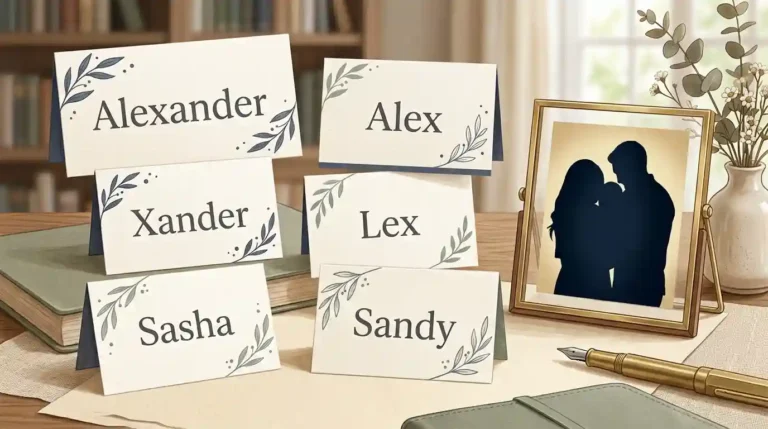
Alex, Al, Alec, Lex, Xander, Zander, and Sandy offer different tones for Alexander. Alex is familiar and versatile; Al is brief; Lex feels crisp; Xander uses the latter part of the full name; and Sandy has a traditional connection.
Choose according to sound and context rather than assuming one version is more correct. A family might use Alex at home and the full name at school, while the boy later chooses Xander for himself. The guide to nicknames for alexander can help you compare more options without losing the connection to the original name.
Nicknames for Benjamin
Ben, Benji, Benny, and Benno are possibilities connected with Benjamin, although usage varies by language and household. Ben is straightforward across ages; Benji feels lively and affectionate; Benny adds a familiar ending.
Benjamin comes from Hebrew and is commonly explained as “son of the right hand.” A short form carries its connection to the full name, but you do not need to repeat that meaning every time you use it. If the child likes Benji now and Ben later, both can remain part of the same naming story.
Nicknames for Christopher
Chris, Chrissy, Kit, and Topher give Christopher several distinct sounds. Chris is the most direct clipping; Topher comes from the latter portion; and Kit is a traditional nickname even though the relationship is not obvious from modern spelling.
Chrissy may sound affectionate but has different gender associations across communities, so use it according to the person’s preference. Kit offers a compact alternative when several friends are already called Chris. Try both with the surname before deciding which version feels clearest in everyday introductions.
Nicknames for Daniel
Dan, Danny, and Dani are common ways to shorten Daniel, with pronunciation and usage depending on the person and language. Dan is concise, Danny familiar and friendly, and Dani may also be used for other given names.
If the question is “What is the name short for?” context matters: Dani does not always mean Daniel. Ask the person rather than assuming. For a family shortlist, compare the full name, the everyday version, and the surname aloud. A simple short form often needs less invention than a completely unrelated nickname.
Nicknames for Edward
Ed, Eddie, Ned, and Ted are established options for Edward. Ed is brief and direct; Eddie adds warmth; Ned and Ted give the name a less obvious traditional route.
Some nicknames overlap with other full names. Ted can connect with Theodore as well as Edward, so the nickname alone does not identify the legal name. That overlap is usually harmless in everyday conversation, but it matters when writing a name-origin explanation. Choose the version the person likes rather than insisting that the letters match perfectly.
Nicknames for Gabriel
Gabe, Gabby, and Gabi can connect with Gabriel, though the latter two have broader use and different associations in different languages. Gabe is especially easy to explain and suits a variety of ages.
Gabriel is a Hebrew name commonly translated as “God is my strength.” That established meaning differs from an invented claim that Gabe means “confident leader.” A nickname can suggest confidence in a particular context without changing its linguistic origin. If meaning matters to the family, keep the explanation accurate and simple.
Nicknames for Jonathan
Jon, Jonny, and Johnny can shorten Jonathan, although Johnny also commonly connects with John. Jon keeps the spelling relationship clear; Jonny adds an affectionate ending; Johnny follows a widely familiar nickname pattern.
Do not automatically replace Jon with John when writing someone’s name. The person may deliberately use one spelling because it connects with Jonathan or matches his established identity. Ask which version he prefers on invitations, school materials, and contact lists. A familiar nickname deserves the same spelling care as a formal given name.
Nicknames for Michael
Mike, Mikey, and Mick offer familiar ways to shorten Michael, with usage varying by community. Mike is easygoing and adaptable; Mikey sounds more affectionate; Mick gives a compact alternative.
If you want a good nickname for a guy who already dislikes Mikey, choosing another cute ending is unlikely to solve the problem. Ask whether he prefers Mike, Mick, or Michael. A person’s own choice gives better guidance than assumptions about which version sounds friendliest. The full name can remain the most comfortable option.
Nicknames for Nicholas
Nick, Nicky, Nico, and Nik are possible options for Nicholas or related language forms. Nick is familiar and concise; Nicky adds a softer tone; Nico offers a different rhythm; Nik changes the spelling while preserving a similar sound.
Clarify the person’s preferred spelling, especially online or in written introductions. Nicky, Nicki, and Nikki may sound similar but do not necessarily represent the same chosen identity. A short name is still a name worth getting right. If the boy wants something distinctive, Nico may provide that without needing extra punctuation.
Nicknames for William
Will, Willy, Willie, Bill, Billy, and Liam have connections with William. Will follows an obvious shortening pattern, Bill is a traditional alternative, and Liam developed as a short form within the name’s broader linguistic history.
Will and Bill often feel easy to use across ages; Billy and Willie can be affectionate or independent everyday choices. Ask which form feels comfortable in the person’s community because slang associations may differ. Having several established options is an advantage: the boy can change the tone without needing to abandon the connection to William.
Nicknames for Zachary
Zac, Zach, Zack, and Z offer concise options for Zachary, while Zachy can function as a more affectionate family adaptation. The common short-form spellings sound similar but should not be treated as interchangeable in writing.
Ask whether the person prefers Zac, Zach, or Zack before putting the name on a card or profile. Z works best when the single letter is easy to recognize in context. If several people share the initial, a longer short form may prevent confusion. Clear use matters more than choosing the fewest possible letters.
Boy Nicknames from Initials
Initial-based nicknames offer a personal connection without requiring a shortened given name. AJ, BJ, CJ, DJ, EJ, JD, JJ, JP, KJ, LJ, MJ, PJ, RJ, and TJ are examples, but the letters should reflect a combination the person understands and likes.
| Nickname | Illustrative full-name combination |
| AJ | Alexander James |
| CJ | Christopher Jude |
| DJ | Daniel Joseph |
| JJ | Jonathan James |
| MJ | Michael James |
| PJ | Peter Julian |
| TJ | Theodore James |
These are examples, not required expansions. TJ can stand for many different names, and a family may use initials drawn from a first name and surname instead of a middle name.
Check unintended abbreviations and slang associations before choosing. Some letter combinations have meanings beyond names. It is also worth saying the initials aloud with the surname because two written letters can become several spoken syllables. Initials are compact on the page, but they are not automatically shorter in conversation.
Boy Nicknames Based on Surnames
Surname-based nicknames can be useful when several classmates or teammates share a first name. They may come from the whole surname, a shortened syllable, or an affectionate ending. Smithy from Smith, Jonesy from Jones, Mac from a suitable Mc- or Mac- surname, or a simple surname used directly illustrate the approach.
Ask before adapting a surname, particularly when it has cultural significance or a pronunciation unfamiliar to the group. The purpose is clear, friendly recognition, not making a name easier by changing it without permission.
Avoid jokes based on an unfortunate rhyme or an ethnic stereotype. A surname belongs to a person’s identity and family background, so careless humor can feel more personal than the speaker expects.
For online use, think about how much the full surname reveals. A private team nickname does not necessarily need to become a searchable public handle. A given-name short form or unrelated interest word may provide a more private alternative.
Boy Nicknames with Meanings and Origins
Meaning can refer to two different things: the linguistic history of a name or the personal association a nickname carries. Theo has a connection with Theodore and its established origin; Scout may symbolize curiosity because of how a family uses it. Both can be meaningful, but they should be explained differently.
When someone asks, “What does your nickname mean?” a useful answer might be “It is short for Theodore” or “My friends call me Scout because I love exploring.” You do not need to invent a translation to make a personal nickname important.
Nicknames That Suggest Courage and Strength
Bear, Hawk, Ranger, Rocky, and Wolf can suggest strength, resilience, or outdoor confidence through imagery. Alex, when connected with Alexander, also links to a name whose Greek roots concern defending people. Gabe, from Gabriel, connects with the established meaning “God is my strength.”
Keep symbolism separate from etymology. Bear is an animal word used as a nickname; Rocky may evoke steadiness or a fictional boxer; neither should automatically receive a fabricated historical translation.
If courage is your theme, explain what it means in your family: persistence, helping others, trying something new, or being honest. That creates a more thoughtful connection than choosing the loudest-sounding name.
Nicknames That Suggest Kindness and Happiness
Sunny, Buddy, Joy, and Sunshine communicate warmth through everyday language. Their value comes from the association they create rather than a hidden naming history. Felix has Latin roots connected with good fortune and happiness, while Asher is a Hebrew name associated with happiness or blessing.
Felix and Asher can be complete given names, not necessarily nicknames. They belong in a meaning-based comparison only when that distinction is clear. A family may use a full given name informally without turning it into a traditional diminutive.
Choose positive symbolism without asking the boy to remain happy all the time. A warm nickname should welcome him as he is, including on difficult days.
Nickname Comparison: Full Names, Meanings, Pronunciation, and Best Uses
The comparison below separates full-name meanings from creative associations. Pronunciations are simplified guides for common American English use; accents, languages, and personal preferences can change them.
| Nickname | Full-name connection | Meaning or association | Approximate pronunciation | Best uses |
| Alex | Alexander | Full name has Greek roots concerning defending people | AL-eks | Everyday use across ages |
| Ben | Benjamin | Full name commonly means son of the right hand | BEN | Familiar family and public use |
| Gabe | Gabriel | Full name commonly means God is my strength | GAYB | A clear name-based option |
| Theo | Theodore | Full name means gift of God | THEE-oh | Friendly everyday use |
| Will | William | Germanic elements concern will or desire and protection | WIL | Short, adaptable daily use |
| Kit | Christopher | Traditional nickname; full name means bearing Christ | KIT | A compact alternative to Chris |
| Sunny | Usually no required full name | Warmth and sunshine association | SUN-ee | Affectionate or chosen use |
| Scout | Usually no required full name | Exploration and curiosity association | SKOUT | Outdoor interests or handles |
| Bear | Usually no required full name | Animal imagery and family affection | BAIR | Private family use or chosen identity |
If the meaning is the main reason for choosing a nickname, confirm the original full name rather than relying on an unsourced claim attached to the short form. A nickname can inherit a connection without having a separate ancient meaning of its own.

What Is a Nickname and Why Does It Matter?
A nickname is an alternative name used instead of, or alongside, a person’s formal name. It may be a shortened given name, an affectionate diminutive, a descriptive word, an initial combination, or a chosen online identity.
A short form removes part of a name, as in Daniel becoming Dan. A diminutive adds familiarity or affection, as in Ben becoming Benny. Everyday speech often calls both nicknames, even though the naming methods differ. What matters is understanding the connection rather than forcing every choice into one category.
Nicknames can express friendship, belonging, family history, and personal identity. They can also feel unwelcome when imposed, especially if they point to a sensitive trait or an old story the person would rather leave behind.
There is no need to claim that a particular nickname will improve self-esteem or determine personality. A simpler principle is enough: a name is more likely to feel affectionate when the person likes it and has control over how it is used. Child autonomy and nickname preferences should be part of the decision as children grow.
How to Create a Unique Boy Nickname
If a list does not offer the right choice, create a nickname from a real connection. Start with the person’s name, interests, language, or a shared memory. Then shorten the result until it is easy to say and ask whether he likes it.
A nickname generator can help produce possibilities, but it cannot understand your relationship or judge whether a joke is comfortable. Use it for brainstorming, then make the final choice through real conversation.
Shorten or Adapt His Given Name
Look at the beginning, middle, and end of the name. Alexander can become Alex or Xander; Andrew can become Drew; Christopher can become Chris or Topher. You can also explore established diminutives before inventing a new version.
If the given name is already short, try initials or a gentle ending instead of cutting it awkwardly. Not every name needs shortening. A personal nickname is optional, and keeping the full name can be the most natural solution.
Draw Inspiration from His Hobbies and Interests
List two or three interests the boy genuinely enjoys: drawing, football, coding, music, hiking, or cooking. Then consider a simple word connected with the interest, such as Sketch, Coach, Byte, Jazz, Scout, or Biscuit.
Choose an interest he identifies with, not one adults hope he will pursue. A child who occasionally kicks a ball does not automatically want a sports nickname. If his favorite activity changes, allow the nickname to change with it or remain as an affectionate memory.
Use an Inside Joke or Shared Memory
A friendly memory can produce a nickname that no list could predict. A camping trip may inspire Compass; a pancake breakfast could create Waffles; a family drawing session might lead to Doodle.
Keep the story kind and shareable. If the nickname depends on a private mistake, frightening event, or humiliating accident, it may bring back discomfort instead of affection. The best shared-memory name makes both people smile without requiring one person to become the permanent subject of the joke.
Combine Words Creatively
Combine a short name with one relevant idea: Ben + books = BookBen, Finn + photography = FinnFrames, or Nico + sketches = NicoSketch. This method often works especially well for online handles.
For a spoken nickname, simplify further. A construction that looks clear in a username can sound awkward aloud. Remove unnecessary words and check whether the rhythm feels natural. Two meaningful elements are usually easier to remember than a long chain of dramatic terms.
Add Numbers or Symbols Thoughtfully
Numbers and symbols may help when a preferred username is unavailable, but they should not make the handle difficult to read. A clear separator can be useful; a string of punctuation usually needs constant explanation.
Avoid automatically adding a birth year, full birthday, school number, or other identifying information. Try a neutral word variation first. Platform rules and username availability change, so check the account directly rather than assuming an example from a naming guide will work everywhere.
Adapt Words from Other Languages
Use a language connected with the person’s family, interests, or experience, and confirm pronunciation and meaning with a reliable source or fluent speaker. An attractive spelling is not enough to establish appropriate use.
Check whether the word is a given name, a household endearment, a title, or a sacred expression. Those functions are distinct. If a family already has a meaningful nickname in its own language, learning to pronounce it correctly is often better than replacing it with an approximate English substitute.
How to Choose the Right Boy Nickname
Build a shortlist of three to five names rather than trying to decide from hundreds at once. Use each in a few ordinary sentences, compare the sound with the surname, and invite the person’s response. You can then remove names that need too much explanation or feel uncomfortable in the intended setting.
The answer to “What’s the best nickname?” is the one that fits the person, the relationship, and the way it will actually be used. Popularity, originality, and style can help, but none should overrule preference.
Match His Personality and Your Relationship
Choose the level of intimacy first. Buddy may suit a friend, Teddy a child or adult who likes it, and Honey a romantic partner. A personality-based nickname should recognize a trait without defining the entire person.
If you are unsure whether the name is too familiar, ask. A good nickname for a guy is one he welcomes from you specifically. The fact that another person uses it does not automatically give everyone permission to do the same.
Check How It Sounds with His Full Name
Say the nickname, middle name if relevant, and surname together. Listen for awkward rhymes, repeated sounds, or combinations that unintentionally resemble another word. Also try a normal greeting and a spoken introduction.
Written initials can reveal a connection you missed, while spoken rhythm can uncover a different issue. A nickname that looks attractive on a card may not be comfortable to call across a room. Both checks are useful before putting the name on personalized items.
Consider Spelling and Pronunciation
Choose a spelling that reflects the person’s identity and is practical for the intended audience. Familiarity helps, but it should not require changing a culturally meaningful name simply because someone has not learned it yet.
For an unusual choice, offer a brief pronunciation guide. For a common short form such as Zac or Zack, clarify the preferred spelling rather than treating the versions as identical. A nickname should not create unnecessary corrections, but the person’s preference still takes priority.
Choose a Nickname That Can Grow with Him
Imagine the name at several stages: preschool, a teenage introduction, a college application conversation, and an adult family gathering. You do not need one name for every setting, but flexibility can be useful.
Benji can become Ben, Teddy can become Ted or Theo, and a childhood home nickname can remain private. Choose a name with room to evolve rather than a rule that the boy must keep it forever. Nickname longevity is a possibility, not an obligation.
Include Him in the Decision
As a child becomes able to express preferences, ask which name he likes and where he wants it used. Give options without making one sound like the answer you expect.
“Would you like Teddy, Theo, or Theodore at school?” is more useful than announcing a decision in front of others. For a teenager or adult, ask directly and accept the response. A person does not need a complicated reason to dislike a nickname; preference alone is enough.
Consider Family Traditions
A nickname can honor a grandparent, preserve a household naming style, or recall a family story. Explain that connection positively, then allow the child to decide how it fits his own identity.
Tradition is most meaningful when it is welcomed. A family can appreciate an inherited nickname even if the boy chooses another everyday version. Keep the memory without turning it into a duty. You can also honor the relative through a middle name, a story, or a private affectionate form.
Nickname Mistakes to Avoid
A nickname can become uncomfortable when it is forced, misunderstood, too revealing, or based on a joke the person does not share. Most problems are easier to prevent than to undo after a whole group has adopted the name.
Before using a choice widely, check the meaning, the intended context, and the person’s response. A small amount of thought can preserve the warmth that made you want a nickname in the first place.
Avoid Hurtful or Embarrassing Nicknames
Avoid names built around insults, appearance criticism, disability, academic struggles, or embarrassing incidents. “It was only a joke” does not resolve the problem if the person dislikes hearing it.
A nickname may be welcome between two close friends and uncomfortable from everyone else. Do not turn a private joke into a public label without checking. If the name starts causing embarrassment, stop using it and help others move back to the person’s preferred name.
Check Slang Meanings and Cultural Associations
Search an unfamiliar nickname before using it publicly, particularly if it comes from another language, online humor, or a letter combination. A Google search can reveal prominent associations, while a fluent speaker can explain regional nuance.
Urban Dictionary may flag possible slang, but its user-submitted entries are not proof of a universal meaning. Treat it as a prompt for further checking rather than a final authority. Context, age group, and community can all change how a word is understood.
Avoid Copying Someone Else’s Online Name
A public handle should help people recognize your own identity rather than imply that you are another person, creator, organization, or official character account. Borrowing a general theme is different from copying an identifiable profile.
If a name you like is taken, adapt it with an interest word or another short form. Do not imitate the account’s photo and bio to make the copy convincing. A distinctive, readable handle is more useful than a confusing variation that constantly gets mistaken for someone else.
Keep Personal Information Out of Public Usernames
For public usernames, leave out details that unnecessarily identify the person, especially a child. A complete legal name combined with a birthday, school, team location, or home area can reveal more than intended.
Use a neutral interest or creative word instead. PixelFinn gives a general theme without telling viewers a school or birth date. Also check the profile picture and biography: a private-looking handle does little if the rest of the account publishes the same identifying details.

How to Use Nicknames Respectfully
A nickname remains affectionate when the person can influence it. Use the chosen name in the settings where it is welcome, pronounce it correctly, and avoid sharing private explanations without permission.
Different people may use different names for the same boy. Family, friends, teachers, teammates, and romantic partners have different relationships with him. That variety is not a problem as long as he is comfortable with it and can set boundaries.
What to Do If a Boy Dislikes His Nickname
Stop using it and ask what he prefers. Do not make him defend the request or turn the conversation into a debate about your intentions. A simple “Okay, I’ll use Theo” makes the change easy.
If others have adopted the nickname, correct them calmly when appropriate. You can say, “He prefers Theodore now,” without sharing a private explanation. The person should not have to repeatedly challenge a whole group to reclaim the name he wants.
How Nicknames Naturally Change Over Time
Nicknames often change with pronunciation, friendships, interests, and life stages. A toddler mispronunciation may become a family favorite; a teenager may choose a shorter form; an adult may return to the full given name.
Allow that evolution without treating it as a rejection of the past. The original nickname can remain part of a warm family memory even when it is no longer used every day. A name’s history matters, but the person wearing it should still guide its future.
Frequently Asked Questions
Can a Boy’s Nickname Be His Full or Legal Name?
Yes, some familiar nickname forms are also used as registered given names; an informal nickname alone does not change an existing legal name.
Can Boy Nicknames Be Gender-Neutral?
Yes, options such as Alex, Charlie, Jamie, Sam, and Ash can be used across genders.
What Is a Good Nickname for a Boy?
A good nickname fits his preferences and your relationship; Ben, Buddy, Theo, and Scout offer different starting points.
What Are Some Cute Nicknames for Guys?
Teddy, Joey, Sunny, and Buddy can sound affectionate when the person welcomes them.
What Are Some Cool Nicknames for Boys?
Ace, Dash, Jett, Lex, Knox, and Nico offer short, confident-sounding choices.
What Is the Cutest Nickname for a Baby Boy?
There is no universal winner, but Teddy, Cub, Bean, and Little Bear are gentle family options.
What Nicknames Do Guys Like?
Preferences vary, so ask whether he likes a name-based, friendly, funny, or affectionate option.
What Is a Short Name?
A short name can be a brief complete given name or a shortened version of a longer name.
How Do You Come Up with a Nickname for a Guy?
Start with his name, interests, or a kind shared memory, then choose a version he enjoys hearing.
What Is the Most Beautiful Nickname?
A beautiful nickname is one whose sound, meaning, or personal story feels right to the person using it.
How Can I Tell What a Nickname Is Short For?
Ask the person, because short forms such as Ted, Max, and Alex can connect with more than one given name.
Can a Boy Have More Than One Nickname?
Yes, he may prefer one name at home, another among friends, and his full name elsewhere.
Final Thoughts
The best boy nicknames combine a pleasing sound with a connection that feels real. A familiar short form such as Ben or Theo can be just as meaningful as an unusual choice inspired by a hobby, family language, or shared memory. Start with the style you like, narrow the options to a few names, and test them in everyday conversation. Then ask the person who will actually hear the nickname whether it feels comfortable. Keep cultural context, pronunciation, privacy, and room to grow in mind, especially when choosing for a child. You do not need the cleverest name in the list; you need one that brings warmth to the relationship. Revisit our boy nicknames guide, choose three favorites, and let the right one develop naturally.